Anycubic Photon Mono 4: Is the 10K Resin Upgrade Worth It?
Julia Ellery 22 Sep 2026 10 min read ASIN B0DB887MCD
This product against the Tools & Outdoors median
| Figure | This product | Category median | Where it sits |
|---|---|---|---|
| Buyer score Average star rating left by Amazon buyers, out of 5. | 4.3 / 5 | 4.4 / 5 n=48 | 2% lower than the median |
| Spec fields published How many attributes the seller fills in on the listing. | 6 | 5.0 n=48 | 20% more than the median |
Medians are taken across the 48 published reviews in Tools & Outdoors; n on each row is how many of them publish that figure. The notch on every bar marks the median, so a fill reaching past the notch sits above it. Buyer score is the average star rating left by Amazon buyers, not a score from this site.
- Brand
- Anycubic
- Buyer score
- 4.3 / 5 average from Amazon buyers
- Spec fields
- 6 attributes on the listing
As Amazon Associates, we earn from qualifying purchases. This means we may receive a small commission at no extra cost to you if you click through and make a purchase.
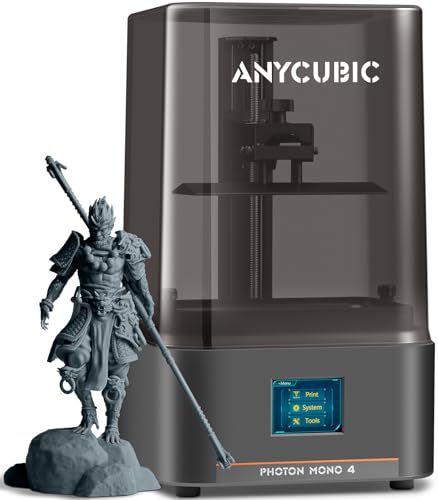
Miniature painters, wargaming enthusiasts, and roleplaying hobbyists continually search for ways to eliminate visible layer lines and pixel stepping on tabletop figures. If you are examining the Anycubic Photon Mono 4, you are likely wondering whether upgrading to an anycubic 10k resin printer yields a noticeable difference compared to older 4K hardware. For gamers debating photon mono 4 vs mono 4k hardware, the primary distinction lies in pixel pitch and screen density. While earlier 4K printers brought desktop resin fabrication into the mainstream, the Mono 4 packs a 9024×5120 resolution into a compact 7-inch monochrome screen. This configuration drops the horizontal pixel size down to 17×17 micrometers, providing hobbyists with razor-sharp definition on 28mm heroic-scale weaponry, ornate armor scrollwork, and expressive character faces.
In this detailed anycubic photon mono 4 review, we break down the physical and optical characteristics documented for this machine to help you determine if it fits your gaming workshop. We explore how its Anycubic LighTurbo matrix light system impacts optical exposure, examine the physical dimensions of the printing envelope, and evaluate whether the laser-engraved platform provides reliable adhesion for fragile resin prints. We also assess the physical setup, the 4-point bed leveling routine, and key workflow trade-offs, helping you decide if this machine is truly the best resin printer for tabletop gaming projects in its size class.
What You Get With the Anycubic Photon Mono 4 167 words

The printer arrives as an integrated desktop solution designed to minimize workshop footprint while offering high micro-detail output. While the listing does not specify extraneous toolkit accessories, it details a robust hardware layout built from ABS, aluminum, and polycarbonate materials in a gray finish. The primary physical and mechanical features provided in the box include:
- A 7-inch 10K monochrome LCD screen featuring a native resolution of 9024×5120 pixels
- Ultra-fine 17×17 micrometer pixel dimensions on both the X and Y axes for micro-detail reproduction
- Anycubic LighTurbo matrix optical system that delivers uniform lighting across the active LCD surface
- Laser-Engraved Print Platform 2.0 engineered to balance strong layer grip with smooth print release
- A 4-point print platform leveling assembly secured by four corner locking screws
- A maximum build envelope measuring 153.4mm x 87mm x 165mm (6.04 x 3.42 x 6.49 inches)
- Automatic power outage recovery firmware capable of resuming an interrupted print upon electrical restoration
- A lightweight 3.5 kg machine structure with overall outer dimensions of 10 inches by 10 inches by 15 inches
Key Specifications 105 words
Hardware Feature Manufacturer Specification
- Display Type and Size
- 7-inch Monochrome LCD
- LCD Resolution
- 10K (9024 x 5120 pixels)
- X/Y Pixel Pitch
- 17 x 17 micrometers
- Build Volume (X x Y x Z)
- 153.4 x 87 x 165 mm (6.04 x 3.42 x 6.49 inches)
- Optical Light Source
- Anycubic LighTurbo Matrix Light Technology
- Build Surface Texture
- Laser-engraved Print Platform 2.0
- Calibration System
- 4-point manual leveling with corner screws
- Machine Enclosure Materials
- ABS, Aluminum, Polycarbonate
- Physical Dimensions and Weight
- 10 x 10 x 15 inches; 3.5 kg
- Mobile App Connectivity
- Anycubic APP service is not supported
Fields the seller filled in on the Amazon listing (6)
- Color
- Gray
- Size
- Photon Mono 4
- Dimensions
- 10 x 10 x 15 inches
- Weight
- 7.71617917 Pounds
- Product Group
- BISS
- Binding
- Electronics
Print Resolution and Miniature Fidelity 313 words
When evaluating any anycubic photon mono for miniatures, the foremost consideration is how resolving power affects surface smoothness and edge clarity. Older 4K monochrome screens typically featured pixel sizes between 35 and 50 micrometers. While 4K printers produce great models, close inspection under hobby magnifying lamps often reveals subtle stair-stepping along curved surfaces, such as shoulder pads, curved monster scales, and spherical helmets. The Mono 4 addresses this by deploying an ultra-dense 9024×5120 grid across a 7-inch screen. This drops the X and Y pixel dimensions down to just 17×17 micrometers, generating an advertised 105 percent increase in print precision over previous machines like the Mono 2.
This degree of pixel density transforms the overall anycubic photon mono print quality for hobbyists who paint their models with zenithal highlights, thin washes, and translucent contrast inks. Standard miniature washes tend to settle into minute surface grooves, meaning that even faint layer lines or voxel edges can catch pigment and ruin an otherwise smooth gradient. With 17-micrometer pixels, the individual voxels blend smoothly into curves, allowing painters to drybrush and glaze surfaces without fighting unwanted digital artifacts. Fine physical features like feather textures, chainmail links, eyes, and facial hair render with genuine fidelity.
Light dispersion plays an equally critical role in micro-detail reproduction. High resolution on paper means nothing if the underlying ultraviolet light scatters through the resin vat and cures liquid outside the intended boundary. The Mono 4 utilizes Anycubic LighTurbo matrix light source technology, which projects stable, balanced, and uniform UV illumination across the entire 7-inch LCD panel. By keeping light rays parallel and evenly distributed, the optical engine mitigates light bleed, reduces rasterization patterns, and prevents tiny details like delicate spear shafts and thin weapon blades from curing into thick, distorted shapes. For users who also operate filament printers like the kobra x 3d printer for larger scenery, this level of resin precision remains essential for character models.
Build Plate Adhesion and Build Volume Trade-offs 273 words
A high-resolution screen requires a rock-solid build foundation to ensure prints survive the mechanical peel forces inside the resin vat. The Mono 4 features the Laser-Engraved Print Platform 2.0, which incorporates an engineered microscopic pattern across the aluminum plate. When printing delicate miniature supports, the initial burn-in exposure layers must bond tenaciously to the plate surface to prevent models from detaching midway through a job. The textured laser etching delivers mechanical grip for bottom layers, counteracting the vacuum pull created when the LCD separates from the cured resin layer.
Despite this adhesion, the plate texture is calibrated so that cured prints can still be removed cleanly using a standard scraper without gouging the aluminum or shattering brittle miniature limbs. Hobbyists printing multi-piece figures with tiny contact pads will appreciate the reliability of this surface. Preventing base warping is vital for tabletop gaming bases and slotted model stands, and the Laser-Engraved Print Platform 2.0 maintains planarity across the working zone, ensuring miniatures remain flat and true during long printing sessions.
The physical capacity of the machine presents clear parameters for hobby planning. With a maximum build volume of 153.4mm x 87mm x 165mm (6.04 inches by 3.42 inches by 6.49 inches), the printer easily accommodates three to six standard 28mm or 32mm infantry miniatures on a single build plate, depending on support angles. However, larger display monsters, tanks, or chariot kits will require sub-assembly slicing or diagonal orientation. If you need to print full-scale gaming terrain, dungeon tiles, or massive terrain pieces in one go, a dedicated large-format filament machine like the kobra s1 max will serve those bulk-printing duties better, leaving the Mono 4 dedicated to ultra-detailed characters and heroes.
Leveling Mechanics and Workshop Usability 302 words
Proper bed alignment is fundamental to resin printing success, and photon mono 4 leveling relies on a straightforward 4-point manual calibration system. Rather than using an adjustable ball-joint head that can slip under heavy suction forces, the Mono 4 build head is secured by four corner locking screws. The user lowers the loosened build plate down to a leveling card or empty vat, applies even, gentle downward pressure with one hand, and tightens the four corner screws in a cross pattern. The listing confirms that once this initial four-screw leveling is completed, you do not need to repeat the process before every print run.
Workshop resilience is further bolstered by the printer’s power outage resume functionality. Power dips, tripped circuit breakers, or accidental cable snags can ruin an ongoing miniature print job on standard budget machines, resulting in wasted photopolymer resin and extensive vat cleanup. The Mono 4 firmware retains the exact vertical coordinate and print layer progress when power cuts out. Once electricity is restored, the machine allows you to resume curing from the exact layer where it halted, saving material and preventing mid-print losses.
However, users should be aware of modern workflow limitations regarding connectivity. The listing explicitly states that Anycubic APP service is not supported for Photon Mono 4. This means there is no remote Wi-Fi monitoring, no cloud file transfers, and no mobile notifications when a print finishes. You will manage print files exclusively via a standard physical USB flash drive plugged into the machine. While this eliminates network configuration hassles and cloud server outages, hobbyists who prefer wireless workstation control should keep this constraint in mind. Those who appreciate mechanical upgrades and modular component designs, such as the anycubic kobra 3 max print head found on other maker platforms, will recognize that the Mono 4 trades connected features for simple, localized hardware execution.
Anycubic Photon Mono 4 Pros and Cons 67 words
Pros
Pros
- High-density 10K screen with 17-micrometer pixel precision
- LighTurbo matrix light source produces uniform optical exposure
- Laser-engraved build plate improves first-layer model adhesion
- Rigid 4-point screw leveling maintains calibration over time
- Integrated power failure resume function prevents wasted resin
Cons
- No Anycubic mobile application or wireless cloud support
- Modest build volume limits large monster and terrain batches
- Manual leveling requires loosening and tightening four corner screws
Is the Anycubic Photon Mono 4 Worth It 257 words
When deciding whether is anycubic photon mono worth it for your hobby space, the answer depends heavily on your current printing setup and detail expectations. If you are upgrading from an older 2K or 4K monochrome printer, the jump to a 10K panel with 17-micrometer pixel sizing delivers a dramatic improvement in miniature fidelity. Curved armor plating, facial sculpts, and fine cloth textures lose their digital look, yielding injection-mold-like quality that takes paint smoothly. For painters and collectors focused strictly on 28mm to 75mm tabletop miniatures, the jump in sharpness easily justifies the machine.
Conversely, if you already operate a recent 8K resin printer with sub-30-micrometer resolution, the visual jump to 17 micrometers will be subtle to the naked eye at standard gaming table distances. Furthermore, hobbyists who demand wireless printing queues or who want to produce full gaming terrain sets, castles, or large display dioramas may find the 153.4 x 87 x 165 mm build envelope restrictive. Those users might be better served pairing their setup with high-speed filament gear such as the anycubic kobra s1 max combo for scenery while keeping resin hardware strictly for detail work.
For beginners entering the resin hobby, the Mono 4 represents a balanced, highly capable entry point. The 4-point leveling method eliminates the frustration of slipping ball mounts, the laser-engraved plate reliably anchors tricky prints, and the lightweight 3.5 kg chassis fits onto almost any desk or ventilation station. As long as you are comfortable with USB-based file loading and manual resin handling, this printer delivers exceptional micro-detail per square inch of build volume.
Other Options to Consider 126 words
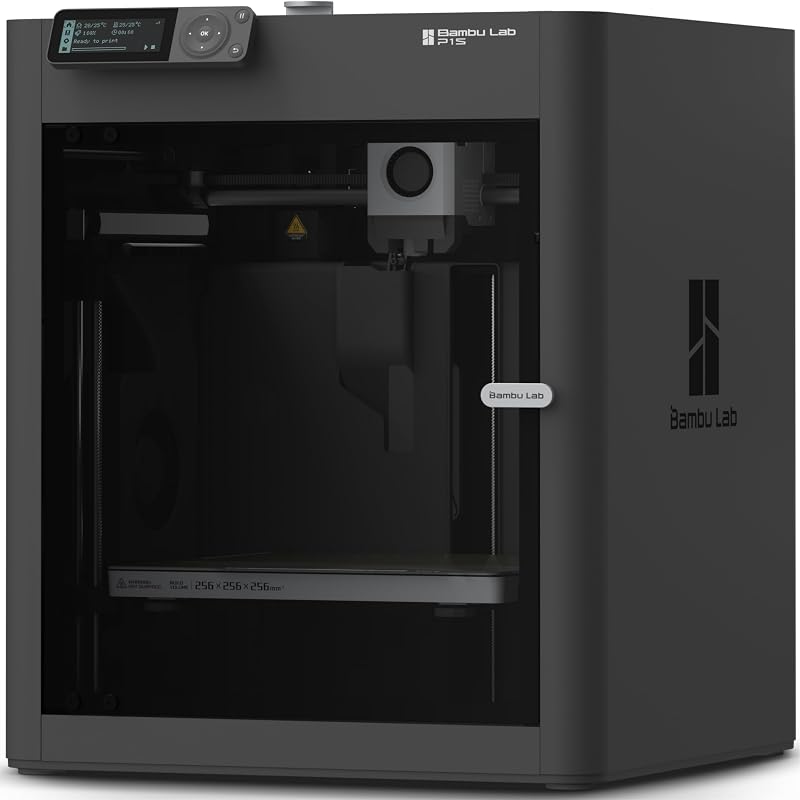
MakerWorld Model Library caters to hobbyists who prioritize multi-color plastic printing and rapid terrain fabrication over ultra-dense liquid resin miniature details, featuring a ready-to-use CoreXY architecture with auto bed leveling and the Bambu Lab P1S Combo AMS multi-color filament system.

FLASHFORGE Adventurer 5M 3D Printer suits makers who need rapid structural printing for gaming boards and large tabletop props rather than microscopic resin figures, offering a 220x220x220mm build volume, fully auto leveling, and high-speed extrusion up to 600mm/s.
Beginner-Friendly Ecosystem with MakerWorld Model provides a fully enclosed CoreXY filament experience for users seeking plug-and-play ease of use for functional gaming accessories and oversized scenery pieces where liquid resin handling and washing are not desired.
FAQ 273 words
What are the primary Anycubic Photon Mono 4K specs compared to the Mono 4?
While older 4K hardware operated at roughly 3840×2400 resolution with pixel dimensions around 35 micrometers, the Mono 4 features a 7-inch 10K screen with 9024×5120 resolution and 17×17 micrometer pixels. The Mono 4 also incorporates the upgraded LighTurbo matrix light source and the Laser-Engraved Print Platform 2.0 for superior surface detail and first-layer adhesion.
How does Photon Mono 4 leveling work during initial setup?
The printer utilizes a manual 4-point leveling mechanism. Users loosen four corner screws on the print head, lower the plate onto a leveling sheet or empty vat, apply gentle, uniform pressure across the platform, and tighten the four screws in sequence. Once tightened, the platform maintains calibration without requiring re-leveling before every print.
Does the Anycubic Photon Mono 4 support Wi-Fi or mobile app monitoring?
No. The manufacturer listing explicitly notes that Anycubic APP service is not supported for the Photon Mono 4. All print files must be transferred locally using a standard USB drive, and monitoring must be done directly at the machine.
Can the Anycubic Photon Mono 4 resume printing after a power cut?
Yes. The Mono 4 includes built-in power outage recovery firmware. When electrical power is restored following an outage or power interruption, the printer can resume curing from the exact layer where it stopped, saving photopolymer resin and avoiding wasted print time.
What is the build volume of the Anycubic Photon Mono 4?
The printer provides a maximum build volume of 153.4mm x 87mm x 165mm, which translates to 6.04 inches wide, 3.42 inches deep, and 6.49 inches high. This volume easily accommodates several 28mm to 32mm gaming miniatures or small multi-part model kits.
The other listings this review names
-

Bambu Lab P1S Combo, P1S 3D Printer and AMS, Multi-Color 3D Printing
4.2/5 Amazon buyer average 6 spec fields
-

-
Bambu Lab P1S 3D Printer, Ready-to-Use FDM 3D Printer
4.5/5 Amazon buyer average 6 spec fields