HPBS H50 5000A Jump Starter Review: Real Power for Big Engines
Julia Ellery 27 Sep 2026 9 min read ASIN B0BPWZKFVV
This product against the Tools & Outdoors median
| Figure | This product | Category median | Where it sits |
|---|---|---|---|
| Our score Our score, out of 10. | 8.8/10 | 8.8/10 n=157 | level with the median |
| Spec fields published How many attributes the seller fills in on the listing. | 5 | 5.0 n=157 | level with the median |
Medians are taken across the 157 published reviews in Tools & Outdoors; n on each row is how many of them publish that figure. The notch on every bar marks the median, so a fill reaching past the notch sits above it. Scores are out of 10, based on listed specifications and buyer feedback.

- Brand
- HPBS
- Our score
- 8.8/10
- Spec fields
- 5 attributes on the listing
As Amazon Associates, we earn from qualifying purchases. This means we may receive a small commission at no extra cost to you if you click through and make a purchase.
Drivers managing full-size trucks, heavy-duty utility haulers, or performance passenger cars frequently face dead battery scenarios that render basic roadside jumper cables inadequate. Choosing a portable jump starter requires balancing raw instantaneous amperage against onboard diagnostic safety features. The HPBS H50 is engineered specifically for motorists operating larger powerplants, delivering a substantial 5000A peak output current designed to handle up to 10.0-liter gasoline engines and 8.0-liter diesel platforms. For drivers evaluating whether this compact, multi-functional jump box can replace bulky service packs or eliminate long waits for roadside assistance on desolate interstates, examining its internal battery architecture and real-world interface provides clear buying clarity.
When assessing this unit, shoppers should expect a lightweight, lithium-polymer power source that merges heavy-duty cold cranking capabilities with modern device recharging and active status reporting. While the manufacturer assigns a 4000 milliamp_hours capacity figure alongside its 5000A peak rating, the unit prioritizes rapid discharge bursts to revive stubborn starter motors in one to two seconds. In this comprehensive HPBS H50 jump starter review, we will dissect the complete H50 jump starter specs, inspect its 3.0-inch screen telemetry, evaluate the safety protocols embedded within its smart clamps, and examine whether its broader capabilities make it an essential travel safeguard.
What You Get With the HPBS H50 91 words

The retail package is bundled as a self-contained emergency recovery kit intended for immediate vehicle stowage without requiring separate accessory bags.
- HPBS H50 portable jump starter power unit
- Heavy-duty jumper cable assembly with integrated smart protection module
- Dedicated protective storage box designed to prevent violent transit impacts
- USB to Type-C charging cable
- Comprehensive user manual for operating instructions and safety guidelines
- Integrated 3.0-inch diagnostic LCD display panel
- Three-mode emergency LED flashlight supporting continuous, SOS, and strobe functions
- Dual USB output array featuring standard 5V 2.4A and multi-voltage quick charging
Key Specifications 93 words
Specification Attribute Manufacturer Detail
- Peak Output Current
- 5000 A
- Operating Voltage
- 12 Volts
- Maximum Engine Capacity
- Up to 10.0L Gas / 8.0L Diesel
- Internal Battery Chemistry
- Lithium Polymer
- Stated Battery Capacity
- 4000 milliamp_hours
- Physical Dimensions
- 7.08"D x 3.14"W x 1.77"H
- Total Item Weight
- 1.2 pounds
- Recharging Input Port
- 18W Type-C Input
- Fast Charge Output Ports
- USB 5V/2.4A, USB 5V/9V/12V Quick Charge
- Manufacturer Warranty
- 2 Years Quality Assurance
Fields the seller filled in on the Amazon listing (5)
- Color
- Red
- Dimensions
- 7.08 x 3.14 x 1.77 inches
- Weight
- 1.21 Pounds
- Product Group
- Automotive Parts and Accessories
- Binding
- Automotive
Cranking Capability for Large Displacement Engines 262 words
The primary engineering objective behind this 5000a jump starter battery pack is delivering sufficient momentary current to break high-compression rotating assemblies out of static friction. Large displacement blocks—such as work trucks running massive V8 or V10 gas blocks up to 10.0 liters, or turbo-diesels reaching 8.0 liters—demand immense transient current that standard budget jump boxes often cannot supply. The hpbs 5000a jump box utilizes high-discharge lithium-polymer cells capable of transferring extreme current across a dedicated 12-volt circuit, firing vehicles up in just one to two seconds under proper operational conditions.
According to official manufacturer metrics, a fully charged unit can execute up to 40 jump-start cycles before exhausting its onboard cell reserve. However, high-demand cranking draws severe current that taxes the internal bus bars. To ensure successful ignition and preserve cell longevity, HPBS explicitly recommends that the internal battery level remain above 75 percent charge when attempting to start a vehicle. Motorists accustomed to traditional, bulky shop boosters like the jnc 660 jump starter will find that this 1.2-pound lithium unit offers equivalent or superior peak discharge while consuming a fraction of the cargo footprint.
It is critical to observe mechanical boundaries when using this jump starter for 10l gas engine applications. Attempting to crank machinery with displacements exceeding the stated limits can overload the intelligent clamps or trigger safety lockouts. For reliable hpbs jump starter battery performance, users must also follow strict maintenance intervals by cycling and recharging the device every two to three months to maintain active internal chemistry, especially when storing the unit inside a cold trunk or an unconditioned glove box.
Telemetry and Status Monitoring with the LCD Screen 208 words
A prominent feature distinguishing this model from entry-level hardware is the integrated 3.0-inch LCD display. Traditional jump packs rely on vague four-stage LED bars that leave drivers guessing whether their pack holds sufficient energy to turn over a cold engine. When stranded on remote secondary roads or deserted highway shoulders, precise readout telemetry removes anxiety by communicating exact internal charge percentages and clear operating alerts directly to the user.
This portable 12v jump starter lcd display also functions as an essential diagnostic bridge during connection. By providing immediate visual feedback, the screen helps drivers identify whether the clamps have established a complete circuit with the lead-acid battery terminals or if a fault condition requires adjustment before turning the key. This elevated clarity contrasts with basic emergency packs like the fanttik t10 jump starter, which use smaller icon displays or basic pin lights to communicate basic status messages.
Furthermore, readable diagnostic information is invaluable in high-stress nighttime breakdowns. The backlighting of the 3.0-inch screen ensures that readings remain fully legible without requiring the user to aim a secondary flashlight at the casing. Having unambiguous visibility over operational status streamlines the recovery sequence, allowing drivers to execute a jump start quickly and safely without lingering alongside dangerous moving highway traffic.
Integrated Protections and Thermal Operating Boundaries 213 words
Connecting an external high-current power source to an automobile’s sensitive electrical harness presents inherent safety risks if equipment lacks comprehensive circuit regulation. The h50 jump starter specs include a suite of ten intelligent safety protections embedded directly into the clamp circuitry. These automated safeguards actively prevent disastrous user errors, including reverse polarity hookups, short circuits, high-voltage feedback, battery over-charging, severe cell over-discharging, and internal thermal runaway conditions.
To safeguard the hardware from thermal stress, the manufacturer mandates strict duty-cycle protocols during field use. Following any starting attempt, users must wait at least 30 seconds before attempting a second crank. Rapid, continuous cranking draws sustained amperage that can generate internal heat spikes, potentially triggering thermal shutdowns or damaging the internal polymer layers. Adhering to this mandatory cool-down interval ensures the internal switching components remain within safe operating thresholds.
Storage discipline is equally crucial for maintaining system integrity over multi-year periods. The manufacturer warns that the unit should never be exposed to ambient temperatures exceeding 140 degrees Fahrenheit, a threshold easily reached on vehicle dashboards during sweltering summer afternoons. Owners are advised to store the hardware inside the provided protective storage case and place it in lower cabin compartments or vehicle trunks to shield the sensitive electronics from high thermal spikes and violent mechanical impacts during transit.
Auxiliary Power Delivery and Emergency Illumination 219 words
Beyond its primary role as a mechanical recovery tool, the device incorporates versatile hpbs h50 power bank features tailored for off-grid travelers, overlanding enthusiasts, and road-trippers. Recharging the jump box itself is handled through an 18W Type-C input port, facilitating modern connection standard adoption. For outgoing power, the unit provides two dedicated USB-A outlets: a baseline 5V 2.4A port suitable for small accessories and an adaptive Quick Charge port capable of cycling through 5V, 9V, and 12V output curves to rapidly replenish modern mobile smartphones and navigation gear.
Emergency visibility is handled by an integrated multi-mode LED flashlight built directly into the chassis. Operators can cycle the lighting array through three distinct functional configurations: a steady continuous flashlight for under-hood inspections, an SOS pattern for signalling emergency services across dark landscapes, and a rapid strobe frequency designed to warn oncoming traffic of an immobilized vehicle on roadside shoulders.
While multi-functional devices such as the wolfbox 4000a jump starter with 160psi air compressor bundle mechanical pneumatic pumps for tire maintenance, the HPBS H50 keeps its physical envelope tightly streamlined. Measuring 7.08 inches long, 3.14 inches wide, and 1.77 inches thick with a modest weight of 1.2 pounds, this power unit prioritizes maximum electrical output and pocketable convenience over bulky integrated air lines, making it effortless to stow in door map pockets or under seats.
HPBS H50 Pros and Cons 57 words
Pros
Pros
- 5000A peak output handles 10.0L gas engines
- Clear 3.0-inch LCD diagnostic telemetry display
- Ten intelligent safety protections against clamp errors
- 18W Type-C input and quick charge USB ports
- Compact 1.2-pound chassis with protective storage case
Cons
- Wall charging block omitted from package
- Requires remaining above 75 percent charge for cranking
- Storage temperature must not exceed 140 degrees
Is the HPBS H50 Worth It 247 words
Determining whether this hardware makes sense for your automotive emergency kit requires balancing its massive peak cranking output against its internal battery capacity profile. For drivers who operate large-displacement work trucks, heavy commercial vans, recreational motorhomes, or large boat engines, having 5000A of peak transient current in a package under two pounds provides immense peace of mind. The ability to confidently start engines up to 10.0 liters of gasoline displacement or 8.0 liters of diesel capacity without requiring a donor vehicle answers the core question behind why motorists invest in modern jump packs.
At the same time, prospective buyers should evaluate how they plan to use the auxiliary power bank features. The manufacturer listing notes an internal battery capacity of 4000 milliamp_hours. While this compact rating permits exceptional current delivery for high-amperage short bursts, it offers fewer continuous recharge cycles for external electronics compared to dedicated heavyweight power banks. If your primary objective is repeatedly charging multiple tablets and gaming devices over an extended camping weekend, a high-capacity power station is more suitable; however, if your goal is reliable vehicle ignition with rapid phone top-ups during breakdowns, the H50 hits the sweet spot.
Ultimately, when asking is hpbs h50 worth it, the answer is a resounding yes for safety-conscious commuters and long-distance road travelers. Backed by a 2-year manufacturer warranty, round-the-clock customer support, and an intuitive 3.0-inch LCD that takes the panic out of dead-battery roadside emergencies, the HPBS H50 delivers a capable, modern, and reassuring roadside recovery package.
Other Options to Consider 108 words
OXILAM Jump Starter 6000A suits commercial truck operators and extreme equipment owners who need even greater peak discharge current to support engines up to all gasoline sizes or 12.0-liter diesel powerplants.

S ZEVZO ET03 Car Jump fits budget-minded suburban drivers operating standard passenger vehicles up to 8.0L gas or 7.0L diesel who prefer a clearly stated 74Wh battery capacity rating alongside an LCD readout.
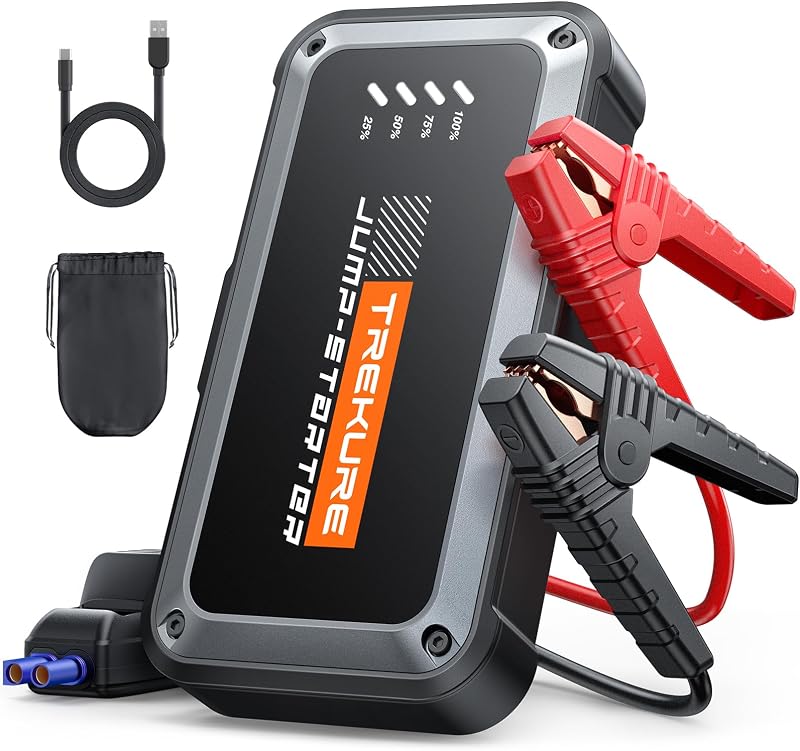
TREKURE Portable Car Battery Jump serves outdoor travelers seeking an explicitly stated 16800mAh capacity cell designed to balance 4000A starting bursts on engines up to 8.0L gas and 6.5L diesel with extended mobile device recharging.
FAQ 262 words
What size vehicle engines can the HPBS H50 jump start?
The device is rated to jump-start 12-volt vehicle engines with displacements up to 10.0 liters for gasoline powertrains and up to 8.0 liters for diesel configurations. Attempting to start engines exceeding these displacement calibration limits is not recommended by the manufacturer.
Does the HPBS H50 package include a wall charging adapter?
The retail package includes a USB to Type-C cable, but the listing specifies that it comes without a dedicated wall charger. You will need to plug the provided cable into an existing USB wall adapter, an automotive 12V USB adapter, or a powered computer port supporting 18W Type-C input.
Why is there a mandatory wait period between starting attempts?
The manufacturer specifies that users must wait at least 30 seconds after each cranking attempt before trying to start the vehicle again. Continuous or consecutive cranking draws heavy electrical current that can cause severe internal heat buildup and potentially damage the jump starter components.
What battery percentage should be maintained before jumping an engine?
HPBS recommends that the starter battery level remain above 75 percent charge when initiating a vehicle jump-start. Maintaining this power reserve ensures sufficient current output to turn over the starter motor and protects the lithium-polymer cells from severe voltage drop.
How often should the jump starter be recharged if left unused in a car?
The manufacturer recommends recharging the starter every two to three months to maintain internal cell activation and operational health. Additionally, the unit must not be exposed to ambient temperatures over 140 degrees Fahrenheit during vehicle transit or long-term storage.