Lowrance StructureScan 3D Transducer: Complete Sonar Analysis
Tobias Benson 6 Oct 2026 8 min read ASIN B014JUUBXW
This product against the Other median
| Figure | This product | Category median | Where it sits |
|---|---|---|---|
| Our score Our score, out of 10. | 8.0/10 | 9.0/10 n=58 | 11% lower than the median |
| Spec fields published How many attributes the seller fills in on the listing. | 5 | 5.0 n=58 | level with the median |
Medians are taken across the 58 published reviews in Other; n on each row is how many of them publish that figure. The notch on every bar marks the median, so a fill reaching past the notch sits above it. Scores are out of 10, based on listed specifications and buyer feedback.

- Brand
- Lowrance
- Our score
- 8.0/10
- Spec fields
- 5 attributes on the listing
As Amazon Associates, we earn from qualifying purchases. This means we may receive a small commission at no extra cost to you if you click through and make a purchase.
Deciding whether multi-beam sonar justifies adding another transom component depends on how quickly you need to understand underwater terrain. The Lowrance StructureScan 3D transducer removes the ambiguity of flat sonar screens by generating a three-dimensional view of bottom structure, drop-offs, and suspended fish. Instead of mentally reconstructing bottom contours from flat waterfall graphs, this hardware shows freshwater and saltwater anglers where structure and fish sit in direct relation to the boat hull.
This package covers the standalone transducer hardware, model number 000-12396-001 and manufacturer part number 000-121396-001. Because this is the lowrance structurescan 3d transducer only configuration, boaters must connect it to a compatible marine network rather than expecting an all-in-one console kit. In this breakdown, we examine the multi-beam sonar engine, analyze the structurescan 3d range reaching up to 600 feet per side, review the lowrance structurescan 3d specs, and evaluate whether this transducer delivers a worthwhile tactical advantage on the water.
What You Get With the Lowrance StructureScan 3D 83 words

The retail package contains the scanning transducer assembly designed to feed high-definition sonar signals into a compatible marine processing network. Because the listing designates this as a transducer-only offering, buyers receive the sensor assembly rather than a complete bundle with a display.
- STRUCTURESCAN 3D XDCR marine scanning transducer unit
- Multi-beam sonar array for 3D spatial terrain visualization
- Integrated elements supporting structurescan 3d 455khz imaging
- Molded black plastic chassis for hull exterior mounting
- Signal output boosting Downscan and StructureScan HD performance
Key Specifications 74 words
Specification Detail
- Brand Name
- Lowrance
- Manufacturer
- Navico
- Model Number
- 000-12396-001
- Manufacturer Part Number
- 000-121396-001
- Item Type Name
- Sensor / Transducer / Scanner / Antenna
- Operating Imaging Frequency
- Enhanced 455KHz imaging
- Scanning Coverage Range
- Up to 600 feet per side (1,200 feet total swath)
- Chassis Material
- Plastic
- Item Weight
- 3.7 pounds
- Intended Application
- Freshwater and saltwater fishing
Fields the seller filled in on the Amazon listing (5)
- Color
- Black
- Dimensions
- 13.07 x 10 x 3.31 inches
- Weight
- 3.7 Pounds
- Product Group
- Sports
- Binding
- Apparel
Multi-Beam 3D Imaging and Spatial Awareness 226 words
The primary reason to consider this hardware is the transition from flat sonar lines to an intuitive three-dimensional perspective. Conventional fishfinders project sonar echoes onto scrolling charts, forcing you to interpret whether an arch sits beneath the keel, off the port beam, or trailing behind. The multi-beam technology inside this lowrance 3d sonar transducer solves this interpretation hurdle by sweeping multiple sonar beams across the water column to assemble a realistic terrain model. By mapping bottom contours, submerged timber, and bait schools in three dimensions, operators immediately see target depth and lateral offset relative to the boat.
This spatial modeling provides a distinct tactical advantage when navigating breaklines and humps. Anglers often waste time making repeated search passes over a waypoint to locate the steepest edge of a drop-off. With three-dimensional visualization, a single pass reveals the slope and orientation of the bottom profile. Suspended fish targets appear at their true depth in the water column rather than as ambiguous smears, allowing you to position casts directly into productive strike zones.
Achieving this level of clarity requires clean signal capture. Much like tuning precision kitchen gear like the ninja barista pro to streamline a morning routine, optimizing marine electronics demands hardware that feeds unambiguous data to your display. When the multi-beam array registers structural shifts, it eliminates guesswork, letting you focus on navigation and boat positioning.
Side Scanning Coverage and 455kHz Imaging Performance 204 words
Reconnaissance efficiency depends on how much bottom area your boat surveys on a single pass. The lowrance structurescan 3d transducer features an increased scanning range reaching up to 600 feet to each side of the boat, creating an expansive 1,200-foot total scanning swath. This wide reach fundamentally alters how anglers dissect large open waters, flats, and wide river channels. Instead of cutting tight grids across a bay, a skipper can cruise along a channel and inspect submerged ledges hundreds of feet away using structurescan 3d side scanning.
Supporting this wide coverage is enhanced 455KHz imaging. While ultra-high megahertz frequencies provide extreme detail in shallow depths, higher frequencies suffer from rapid signal attenuation over distance. By utilizing enhanced 455KHz imaging, this transducer achieves a practical compromise between clean edge definition and lateral signal penetration. The return remains legible across the full 600-foot span, keeping bottom transitions visible even at the outer margins of the screen.
This transducer also boosts the performance of traditional two-dimensional Downscan and StructureScan HD imaging modes. Anglers who run split-screen views benefit from cleaner side-scan imaging and sharper vertical down-scan returns simultaneously. Combining detailed down-looking telemetry with long-range horizontal visibility ensures neither shallow flats nor deep river channels hide subtle bottom features.
Hardware Configuration and System Compatibility 187 words
Before choosing this transducer, boaters must understand what the physical package includes. The listing designates this item strictly as the transducer only, carrying manufacturer part number 000-121396-001. It is a specialized sensor, not an all-inclusive standalone fishfinder. To display three-dimensional imagery, the transducer must connect to a compatible Lowrance multifunction display and its associated StructureScan 3D processing hardware.
Physical mounting requires attention due to the size and weight of the unit. Weighing 3.7 pounds, this transducer is heavier than basic entry-level skimmer transducers. Its molded plastic chassis houses multiple ceramic elements while minimizing turbulence during idling and scanning speeds. The listing does not specify whether mounting brackets or extension cables are included in the box, meaning buyers should verify their transom mounting plates and cable routing pathways before installation.
System planning requires coordinating network components. Just as maintaining an automated home environment with the levoit lv600s smart warm and cool requires compatible hubs, marine electronics rely on tightly integrated network connections. Verifying lowrance structurescan 3d compatibility against your specific display series ensures that high-bandwidth 455KHz sonar signals are processed smoothly without causing screen latency during navigation.
Durability and Marine Environmental Resistance 200 words
Marine transducers endure continuous physical demands, including UV exposure, water drag, and impacts from submerged debris. The Lowrance StructureScan 3D transducer features a black plastic housing built for both freshwater and saltwater applications. Plastic provides clear advantages in marine environments because it is immune to galvanic corrosion and pitting that often degrade metal hardware in saltwater docks.
However, mounting a 3.7-pound plastic housing on the exterior of a boat hull presents durability trade-offs. Because the transducer hangs along the transom waterline to maintain direct contact with clean water, it sits in the path of floating logs, stumps, and shallow rock bars. While the polymer shell resists continuous water exposure, plastic remains vulnerable to cracking if struck at cruising speed. Proper transom positioning—keeping the face level with the hull while avoiding high-impact turbulence zones—is vital for equipment longevity.
Handling harsh outdoor conditions requires the same foresight needed for outdoor utility management, similar to using royal oak tumbleweed fire starters to ensure reliable ignition in damp wilderness conditions. Routine inspection of the plastic housing, checking for hairline stress fractures around the mounting points, and clearing marine growth off the face will keep the multi-beam array operating reliably across multiple seasons.
Lowrance StructureScan 3D Pros and Cons 46 words
Pros
Pros
- Multi-beam 3D underwater perspective
- Wide 600-foot scanning range per side
- Enhanced 455KHz imaging clarity
- Boosts Downscan and StructureScan HD performance
- Corrosion-resistant plastic housing for saltwater
Cons
- Transducer only requiring separate module and display
- Relatively heavy at 3.7 pounds
- Mounting hardware and cable details not specified
Is the Lowrance StructureScan 3D Worth It 198 words
Addressing the core question of whether is lowrance structurescan 3d worth it depends on your fishing style, navigation demands, and electronics setup. For tournament competitors, offshore wreck hunters, and structure-oriented bass anglers, the tactical payoff of true 3D spatial mapping is substantial. Being able to see the exact relationship between bottom contours, brush piles, and fish targets in three dimensions drastically reduces search time. The 600-foot scanning range per side allows you to cover expansive water with fewer passes, transforming how you explore unfamiliar lakes.
On the other hand, this hardware is poorly suited for casual weekend boaters who only need basic depth readings and standard 2D fish arches. Because this listing covers the transducer only, owners of basic fishfinders cannot simply plug this unit into an entry-level head unit. Operating the system requires a network that supports StructureScan 3D processing, introducing technical overhead to your setup.
If your boat already runs a modern Lowrance multifunction network and you want superior underwater reconnaissance, this multi-beam transducer delivers a significant visual leap over traditional imaging. It bridges the gap between abstract sonar blips and concrete underwater topography, making it a valuable upgrade for serious anglers who prioritize spatial awareness.
Other Options to Consider 173 words
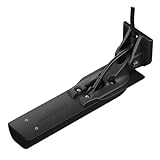
Garmin GT56UHD-TM Transom Mount Transducer: Boaters running Garmin chartplotters will find this transom-mount model a much better fit than attempting cross-brand network integration. While the Lowrance unit delivers proprietary multi-beam 3D modeling within its own ecosystem, this Garmin transducer provides Ultra High-Definition ClearVü and SideVü scanning frequencies built specifically for native Garmin display setups.

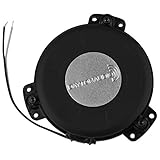
Dayton Audio TT25-8 Puck Tactile: Sim-rig enthusiasts seeking tactile audio immersion rather than marine sonar navigation will prefer this compact tactile transducer bass shaker. While it shares the transducer label with sonar sensors, this 8-ohm puck is built exclusively for audio vibration and haptic feedback in simulation seating, serving a completely different purpose than underwater scanning arrays.
Humminbird 710198-1 XNT 9 20: Anglers using Humminbird fishfinders who want straightforward vertical depth tracking will find this transom-mount single and dual-beam transducer much easier to integrate. It suits boaters who do not need multi-beam 3D rendering or 1,200-foot scanning swaths, providing dependable basic depth returns for Humminbird systems without complex setup requirements.

FAQ 233 words
What is the maximum side scanning range of the Lowrance StructureScan 3D?
The StructureScan 3D transducer features an increased scanning range capable of reaching up to 600 feet to each side of your boat. This provides a maximum scanning swath of 1,200 feet in a single pass, allowing anglers to survey bottom structure and fish schools well beyond the path of the boat.
What frequency does the StructureScan 3D transducer use for imaging?
The unit uses enhanced 455KHz imaging technology. This frequency provides a practical balance between structural detail and long-range penetration, allowing the multi-beam array to maintain image clarity out to 600 feet per side without severe signal loss.
Does this package include the display screen or 3D processing module?
No. The listing specifies that this product is the transducer only (STRUCTURESCAN 3D XDCR, model number 000-12396-001). To view 3D imagery, it must connect to a compatible Lowrance multifunction display and the required StructureScan 3D processing module.
Can the StructureScan 3D transducer be used in saltwater?
Yes. The manufacturer notes that StructureScan 3D is designed for both freshwater and saltwater fishing. Its black molded plastic housing resists saltwater corrosion, making it suitable for coastal and offshore marine environments.
Does the StructureScan 3D improve standard 2D sonar views?
Yes. The product details confirm that the multi-beam sonar technology produces three-dimensional views while also boosting the performance of traditional two-dimensional Downscan and StructureScan HD imaging modes.
The other listings this review names
-
Garmin GT56UHD-TM Transom Mount Transducer
8.2/10 Our score 6 spec fields
-
Dayton Audio TT25-8 Puck Tactile Transducer Mini Bass Shaker 8 Ohm
8.0/10 Our score 5 spec fields
-

Humminbird XNT-9-20T Transom Mount Transducer W/Temp
9.4/10 Our score 6 spec fields