E1840P Sloppy Stage 2 Cam Kit Breakdown: Grassroots LS Horsepower
Julia Ellery 27 Sep 2026 10 min read ASIN B0F3H2ZYR4
This product against the Tools & Outdoors median
| Figure | This product | Category median | Where it sits |
|---|---|---|---|
| Our score Our score, out of 10. | 8.6/10 | 8.8/10 n=157 | 2% lower than the median |
| Spec fields published How many attributes the seller fills in on the listing. | 3 | 5.0 n=157 | 40% fewer than the median |
Medians are taken across the 157 published reviews in Tools & Outdoors; n on each row is how many of them publish that figure. The notch on every bar marks the median, so a fill reaching past the notch sits above it. Scores are out of 10, based on listed specifications and buyer feedback.

- Brand
- Btscar
- Our score
- 8.6/10
- Spec fields
- 3 attributes on the listing
As Amazon Associates, we earn from qualifying purchases. This means we may receive a small commission at no extra cost to you if you click through and make a purchase.
When planning an aggressive performance overhaul on a General Motors small-block V8, selecting the right valvetrain combination determines whether your build delivers crisp power or falls flat. The E1840P Sloppy Stage 2 Cam Kit addresses the needs of grassroots racers and weekend wrenchers seeking substantial upper-RPM breathing and a distinctive muscle-car idle chop. Built around an aggressive hydraulic roller camshaft paired with matched beehive valve springs, replacement lifters, pushrods, and essential replacement gaskets, this all-in-one package eliminates the guesswork of sourcing valvetrain pieces individually across different vendors for GM Gen 3 and Gen 4 engines.
Extracting the full potential from an LS powerplant requires balancing camshaft lift, valve spring seat pressure, and displacement characteristics. In this detailed review, we examine the mechanical attributes of this all-in-one package, evaluate fitment across 4.8L, 5.3L, and 6.0L applications, explore crucial valvetrain geometry concerns, and break down what to expect during physical installation. Whether you are assembling a budget drift truck, upgrading a street cruiser, or dropping a junkyard truck block into an older chassis, this guide outlines the performance reality of the hardware.
What You Get With the E1840P Sloppy Stage 2 Cam Kit 129 words
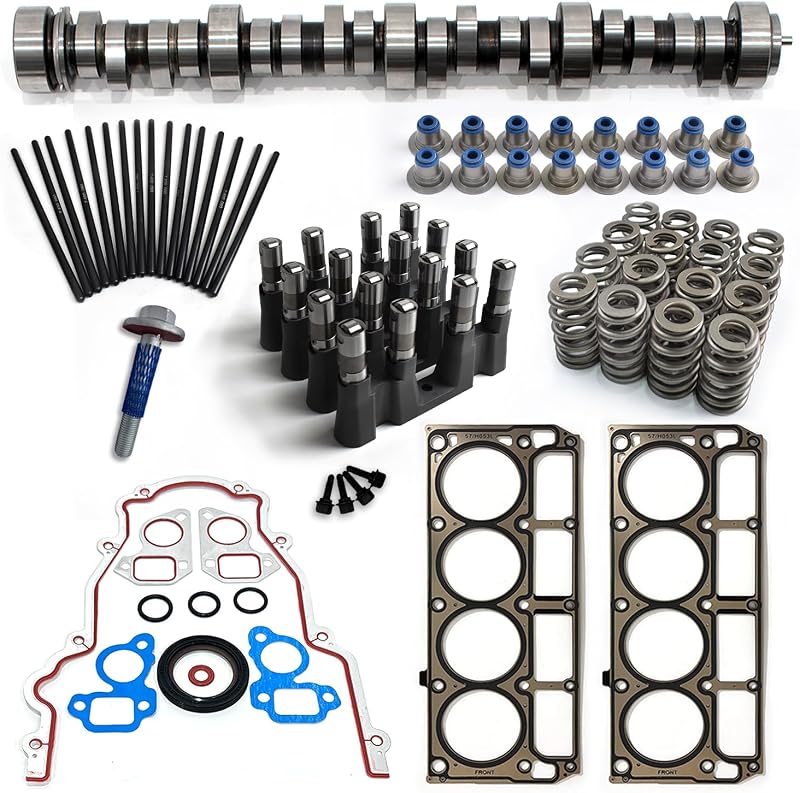
This package arrives as a complete mechanical bundle configured to refresh the core valvetrain and top-end sealing components during a camshaft swap on compatible GM V8 powerplants.
- 1x high-performance hydraulic roller camshaft featuring a .585-inch/.585-inch lift profile.
- 16x beehive valve springs engineered to replace factory units and match PAC-1218 load specifications.
- 16x valve stem oil seals to maintain proper cylinder head oil control.
- 16x hydraulic roller lifters designed to replace OE part HL2148S.
- 16x pushrods sized to standard 7.400-inch valvetrain dimensions.
- 2x multi-layer steel cylinder head gaskets for proper combustion chamber sealing.
- 1x timing cover front gasket to prevent front-drive oil leaks.
- 1x heavy-duty retention screw for camshaft gear fastening.
- Machined exterior finish across precision components backed by a 1-year warranty.
Key Specifications 96 words
Attribute Detail
- Brand / Manufacturer
- BTSCAR
- Manufacturer Part Number
- Camshaft 003
- OEM Reference Compatibility
- E1840P, PAC-1218, HL2148S, 7.400"
- Valve Lift Profile
- .585" Intake / .585" Exhaust
- Spring Style
- Performance Beehive Valve Springs
- Supplied Pushrod Length
- 7.400 Inches
- Package Dimensions
- 24 x 15 x 6 Inches
- Total Package Weight
- 26.6 Pounds
- Compatible Engine Platforms
- 1997–2013 Chevrolet / GMC 4.8L, 5.0L, 5.3L, 5.7L (LS1/LS6), 6.0L (LS2/LQ4/LQ9)
- Included Gaskets
- Pair of Cylinder Head Gaskets and Front Timing Cover Gasket
Fields the seller filled in on the Amazon listing (3)
- Color
- Stage 2 Camshaft Kit-Head Gasket
- Size
- E1840P Cam Kit
- Product Group
- Automotive Parts and Accessories
Valvetrain Lift Dynamics and Pushrod Sizing 292 words
The centerpiece of this kit is the .585″/.585″ lift camshaft profile, a lift measurement widely recognized in grassroots racing circles for balancing aggressive cylinder filling with dependable valvetrain dynamics. Factory GM truck and early passenger car camshafts generally feature conservative valve lift below .500 inches to prioritize idle smoothness, low-rpm fuel economy, and absolute valvetrain silence. Moving to .585 inches of lift significantly increases valve curtain area at peak opening, allowing cylinder heads like the cathedral-port 862, 706, 241, and 243 castings to ingest air at velocity levels standard profiles cannot achieve. This dynamic makes the kit especially attractive for builders seeking an unmistakable muscle-car exhaust rhythm alongside serious top-end pulling power.
Sustaining that level of lift without inducing catastrophic valve float requires strict control over spring seat and open pressures. The included beehive valve springs, designated to replace standard PAC-1218 specifications, feature a tapered design that reduces active valvetrain reciprocating mass compared to cylindrical springs. The reduced retainer weight combined with progressive wire rate dynamics keeps the hydraulic lifters firmly glued to the cam lobes through 6,000+ RPM sweeps. Compared to alternative camshaft profiles such as the ls truck norris cam kit which emphasizes immediate low-end torque delivery, this higher-lift grind demands that every component—from spring tension to lifter preload—operates within tight tolerances.
The kit supplies 16 standard-length 7.400-inch pushrods designed to match the included HL2148S replacement lifters. On un-decked factory engine blocks retaining stock cylinder head thicknesses and standard base-circle valvetrain dimensions, 7.400-inch pushrods typically establish the required hydraulic lifter preload. However, engine builders must verify preload using an adjustable pushrod checker tool during mock-up. If your cylinder heads have been resurfaced or if you are using non-standard head gasket compressed thicknesses, lifter plunge depth will vary, making careful physical measurement mandatory before initial engine run-in.
Engine Platform Compatibility and Displacement Matching 276 words
Compatibility across GM’s Gen 3 and Gen 4 small-block family is one of the strongest appeals of this hardware package. The listing specifies fitment across 1997 through 2013 platforms covering 4.8L, 5.0L, 5.3L, 5.7L LS1/LS6, and 6.0L LS2, LQ4, and LQ9 engines. Vehicle applications encompass Chevrolet Camaro SS, Pontiac Firebird Formula and Trans Am, C5 and C6 Corvettes, Chevrolet SSR, and TrailBlazer SS trucks. While the camshaft mechanically slides into any standard three-bolt cam journal Gen 3 or converted Gen 4 block, how the camshaft performs depends heavily on the engine’s static compression ratio and total cubic inches of displacement.
On smaller displacement variants, such as the 4.8L and 5.3L truck motors, this camshaft profile delivers a noticeable personality shift. The substantial duration behind the .585-inch lift bleeds off dynamic compression at idle and low engine speeds, creating that distinct choppy cadence enthusiasts desire. The trade-off is a reduction in off-idle torque below 2,800 RPM. In heavy pickup trucks or SUVs running stock gearing and a tight factory torque converter, this low-end softening feels sluggish away from stoplights. Equipping a 5.3L vehicle with an aftermarket torque converter rated around 2,800 to 3,200 RPM stall speed transforms the experience, allowing the engine to flash instantly into its powerband.
When installed into larger 5.7L LS1 or 6.0L LQ4 and LQ9 powerplants, the increased cylinder displacement swallows the camshaft profile much more comfortably. The extra cubic inches generate stronger low-rpm vacuum, smooth out low-speed throttle transitions, and broaden the usable torque curve from 3,200 RPM all the way past 6,200 RPM. In Corvette and F-body passenger cars with manual transmissions or appropriately geared automatic setups, the profile delivers punchy mid-range acceleration and ferocious top-end breathing without sacrificing street driveability.
Installation Requirements and Supporting Hardware 247 words
Executing a camshaft swap using this complete package represents an intermediate-to-advanced mechanical undertaking that requires complete top-end teardown. Because the kit includes 16 replacement lifters, the cylinder heads must be unbolted and removed from the engine block. The included multi-layer head gaskets ensure you have fresh sealing surfaces when reinstalling your heads, but builders must remember that Gen 3 and Gen 4 LS engines require new cylinder head bolts or studs, as factory head bolts are torque-to-yield and cannot be safely reused.
Handling a complex valvetrain overhaul requires an organized workspace, proper diagnostic tools, and complete focus over several days of tear-down and reassembly. Builders managing high-value garage workspaces or dedicated workshop bays often rely on smart security devices like the ring spotlight cam plus wired to monitor their tools and vehicle builds during multi-stage engine projects. During assembly, you will also utilize the included timing cover front gasket and heavy-duty retention screw to secure the front drive and timing assembly after aligning your cam and crankshaft timing marks dot-to-dot.
Beyond the mechanical assembly, ECU recalibration is non-negotiable. Installing this profile alters manifold absolute pressure, idle airflow demands, and volumetric efficiency tables across the board. Attempting to run a factory PCM calibration with a .585-inch lift camshaft will result in surging, stalling, fouled spark plugs, and poor fuel trims. A professional dyno tune or experienced street log calibration is mandatory to calibrate idle airflow, spark advance curves, and fueling parameters so the motor idles cleanly and pulls hard through redline.
Airflow Characteristics and Power Delivery 249 words
The true motivation for installing an E1840P grind lies in how it re-shapes an engine’s power curve. Factory truck cams typically peak before 5,200 RPM, rapidly falling off as the stock valvetrain runs out of breath. With the E1840P profile, the power curve shifts upward, coming alive aggressively around 3,500 RPM and holding strong well past 6,200 RPM. When paired with high-flowing cathedral port heads and an unrestrained intake manifold, horsepower gains can exceed 50 to 70 horsepower over a stock truck camshaft on healthy 5.3L and 6.0L engines.
This dramatic shift in airflow behavior demands that supporting induction and exhaust components match the camshaft’s breathing potential. Running restrictive factory truck exhaust manifolds bottlenecks the high-lift exhaust evacuation, dampening performance gains. Pairing this valvetrain setup with long-tube headers and a high-flow dual exhaust system allows the scavenged exhaust pulses to draw fresh intake charge into the cylinders efficiently during valve overlap. While managing your garage workshop or tracking setup adjustments, enthusiasts utilizing diagnostic equipment or workshop cameras like the aosu d1 classic appreciate keeping technical procedures orderly and documented.
Fuel delivery must also keep pace with the elevated airflow volume. While factory flex-fuel injectors or standard 6.0L injectors often supply adequate fuel for mild builds, running an aggressive .585-inch lift cam at 6,500 RPM on an upgraded 6.0L can push standard low-flow truck injectors close to their maximum duty cycle. Checking injector duty cycle during initial tuning sessions ensures the air-fuel ratio remains in a safe, rich power range under wide-open throttle acceleration.
E1840P Sloppy Stage 2 Cam Kit Pros and Cons 57 words
Pros
Pros
- Complete valvetrain package with lifters and gaskets
- Proven .585-inch lift profile for high-RPM power
- Includes PAC-1218 specification beehive valve springs
- Broad fitment across Gen 3 and Gen 4 engines
- Backed by a 1-year manufacturer warranty
Cons
- Requires cylinder head removal to install lifters
- Mandates aftermarket stall converter on smaller displacements
- Requires mandatory ECU recalibration
Is the E1840P Sloppy Stage 2 Cam Kit Worth It 217 words
Determining whether the E1840P Sloppy Stage 2 Cam Kit fits your build comes down to how you plan to use the vehicle and whether your supporting drivetrain is equipped to handle an upper-rpm powerband. If you are constructing a grassroots track car, drift chassis, weekend cruiser, or budget drag vehicle where aggressive idle chop and blistering top-end horsepower take precedence, this all-in-one package provides tremendous value by bundling the camshaft, matched springs, lifters, pushrods, and essential gaskets together.
On the other hand, owners seeking a mild camshaft upgrade for dedicated heavy towing, off-road rock crawling, or daily commuting with a stock torque converter should proceed with caution. The duration and lift profile sacrifice off-idle torque on sub-6.0L engines, requiring an aftermarket stall converter to unlock enjoyable street manners. If you do not want to remove cylinder heads to install new lifters, or if you prefer an OE-style silent idle, a smaller truck-oriented profile will serve your goals better.
For enthusiasts who understand the trade-offs and are prepared to pair the hardware with an aftermarket stall converter, long-tube headers, and a proper custom ECU tune, this package serves as an accessible gateway to genuine small-block performance. It delivers the signature mechanical aggression that has made the stage 2 profile a legendary benchmark across the modern hot rodding landscape.
Other Options to Consider 111 words
Texas Speed TSP Chopacabra Cam caters specifically to GM truck owners seeking an aggressive idle sound and punchy low-to-midrange torque without requiring a torque converter swap on 4.8L, 5.3L, 6.0L, and 6.2L Vortec platforms.

For Dodge Journey Chrysler & provides a direct OEM replacement camshaft, rocker arm, and lifter kit tailored specifically for the 3.6L Pentastar V6 engine found in Dodge, Chrysler, Ram, and Jeep vehicles rather than GM V8 engines.
Intake & Exhaust Camshaft Kit serves late-model 2016 to 2024 Dodge, Chrysler, Jeep, and Ram owners who need to address factory camshaft and rocker arm wear issues on 3.6L Pentastar V6 platforms.

FAQ 249 words
Does the E1840P Sloppy Stage 2 Cam Kit require an aftermarket stall converter?
When installed in automatic vehicles equipped with 4.8L or 5.3L engines, an aftermarket stall converter rated between 2,800 and 3,200 RPM is highly recommended. The camshaft profile shifts the engine powerband higher in the rev range, which causes sluggish off-idle acceleration if paired with a tight factory torque converter.
Can this camshaft kit work with factory LS cylinder heads?
Yes, this kit is engineered to work with standard cathedral-port factory cylinder heads such as the 862, 706, 241, and 243 castings. The included beehive valve springs install in place of factory springs to accommodate the increased .585-inch valve lift without binding.
Do I need to pull the cylinder heads during installation?
Because this complete kit includes 16 replacement hydraulic roller lifters, the cylinder heads must be removed to access and replace the lifters from the lifter trays. The listing supplies two replacement head gaskets to reseal the top end during reassembly.
What pushrod length is supplied in this kit?
The kit includes 16 pushrods sized to standard 7.400-inch specifications. While this length functions on most standard, unmilled engine configurations, checking lifter preload with a pushrod length gauge during dry assembly is recommended to verify correct geometry.
Is computer tuning mandatory after installing this camshaft?
Custom ECU tuning is strictly required. The substantial increase in valve lift and duration alters engine vacuum, airflow dynamics, and idle characteristics, meaning the stock factory computer calibration will not maintain a stable idle or correct air-fuel ratios without remapping.
The other listings this review names
-

8.2/10 Our score 2 spec fields
-

Kirogi Engine Camshaft with Rockers Arm Lifters Kit for Dodge Je-ep 3.6L V6
9.6/10 Our score 3 spec fields
-