SCRIB3D P1 3D Pen Breakdown: Precision and Feed Control for Hobbyists
Julia Ellery 24 Oct 2026 9 min read ASIN B08HM4133L
This product against the Tools & Outdoors median
| Figure | This product | Category median | Where it sits |
|---|---|---|---|
| Our score Our score, out of 10. | 8.6/10 | 9.0/10 n=159 | 4% lower than the median |
| Spec fields published How many attributes the seller fills in on the listing. | 6 | 5.0 n=159 | 20% more than the median |
Medians are taken across the 159 published reviews in Tools & Outdoors; n on each row is how many of them publish that figure. The notch on every bar marks the median, so a fill reaching past the notch sits above it. Scores are out of 10, based on listed specifications and buyer feedback.

- Brand
- Scrib3D
- Our score
- 8.6/10
- Spec fields
- 6 attributes on the listing
As Amazon Associates, we earn from qualifying purchases. This means we may receive a small commission at no extra cost to you if you click through and make a purchase.
Creative tabletop hobbyists and prop builders frequently encounter situations where standard 3D printers cannot easily reach, such as welding scenic scatter, sealing hollow terrain seams, or patching hairline fissures across custom models. Finding a practical handheld fabrication tool comes down to thermal stability and feed regulation, which is where the SCRIB3D P1 enters the conversation. As a dedicated extrusion tool featuring an onboard display screen and continuous feed regulation, it is engineered to deliver predictable plastic output without requiring software expertise or complicated slicer profiles.
Finding an extruder that manages fine detailing without frequent mechanical jams requires a close look at its heating assembly, feed pacing, and material tolerance. In this scrib3d p1 3d pen review, we examine the device from an enthusiast perspective, detailing how its mechanical components perform during delicate crafting and structural modeling sessions. The following sections explore the included starter gear, thermal performance across different materials, real-world feed pacing, structural maintenance, and whether this model merits a spot on your hobby workbench.
What You Get With the SCRIB3D P1 105 words

The retail package provides the essential hardware and introductory supplies required to begin three-dimensional drawing immediately after opening the box, eliminating the need to source auxiliary equipment before starting your first build.
- SCRIB3D P1 3D printing pen equipped with an onboard digital display and stepless feed adjustment.
- Three starter coils of PLA filament providing a combined 30 feet of material in multiple colors.
- Dedicated AC power adapter designed to plug into the rear port of the pen chassis.
- Step-by-step instruction manual detailing initial heating procedures and filament loading protocols.
- Free project stencil guide featuring templated patterns to assist with manual hand calibration.
Key Specifications 91 words
Specification Attribute Manufacturer Detail
- Brand
- SCRIB3D
- Model Number
- SCRIB_PEN_P1
- Chassis Dimensions
- 4.61 x 7.87 x 1.97 inches
- Total Weight
- 10.8 ounces
- Filament Compatibility
- PLA (160-210°C) and ABS (210-235°C)
- Feed Rate Regulation
- Stepless continuous speed slider
- Nozzle Construction
- Ceramic nozzle paired with anti-clogging motor
- Warm-Up Duration
- Approximately 2 to 3 minutes
- Safety Idle System
- 2-minute automatic sleep function
- Power Connection
- Rear-mounted dedicated power adapter
Fields the seller filled in on the Amazon listing (6)
- Color
- Blue, White, Black
- Size
- 1 Count (Pack of 1)
- Dimensions
- 4.6062992079 x 7.87401574 x 1.968503935 inches
- Weight
- 0.92 Pounds
- Product Group
- Toy
- Binding
- Office Product
Extrusion Feed and the Stepless Speed Slider 251 words
For any modeler attempting to fill tiny cracks on cast terrain or trace delicate structural armatures, feed rate consistency directly determines the cleanliness of the finished piece. The SCRIB3D P1 speed slider offers a continuous, stepless manual adjustment mechanism rather than forcing users to choose between rigid factory presets. This design allows micro-adjustments during active drawing, letting you slow the flow down to a steady trickle when joining narrow gaming components or ramp the flow upward when laying broad foundational layers across miniature dungeon tiles.
The mechanical drive utilizes a forward button that activates with a double-click command, pulling plastic through the internal motor gears toward the hot end. Because the motor maintains constant feeding once engaged, you do not need to apply continuous manual pressure on a trigger, which helps reduce hand fatigue during extended model detailing. However, mastering the exact slider travel requires developed muscle memory, as moving the slider even a fraction of an inch alters the extruded bead volume, requiring the user to coordinate hand movement with the rate of advancing plastic.
Maintaining uniform results across uneven surfaces often means pairing handheld extrusion tools with precision workshop instruments. Tabletop hobbyists frequently combine their manual detailing pens with fine mechanical rotary equipment like the fanttik f2 master to grind down seams, trim excess plastic beads, and polish structural welds once the extruded material cures. Smooth transition between raw extruded filament and polished terrain sections relies heavily on keeping the extrusion rate balanced with the surface contact area.
Temperature Range and Filament Compatibility 237 words
Handheld thermal tools succeed or fail based on how accurately they sustain melt-zone heat, making the scrib3d p1 temperature range a vital operational factor. The unit houses a built-in display screen that provides active temperature tracking, giving users visual confirmation as the ceramic heating block climbs toward the selected target. SCRIB3D designs the system around two distinct operational thermal brackets: low-to-medium heat PLA operating between 160°C and 210°C (320°F to 410°F), and higher heat ABS functioning between 210°C and 235°C (410°F to 455°F).
Having access to these two distinct scrib3d p1 filament types expands the scope of creative crafting. Standard PLA serves as an excellent material for quick decorative work, scenic scatter, and organic scenic textures because it exhibits minimal warping and remains manageable at lower operational temperatures. When structural durability is needed for gaming props or load-bearing joints, shifting to ABS yields stronger mechanical bonds capable of handling physical stress and mild friction without shearing.
The initial scrib3d p1 setup takes approximately two to three minutes while the heating core warms up, indicated by an active red status light. Once the heating element reaches operating temperature, the indicator signals that material can be safely advanced through the feed port. Users must remember that while the system supports commercial PLA and ABS lines, engineering filaments requiring higher thermal thresholds, such as nylon or polycarbonate, exceed the operating limits of this internal heating assembly.
Handling Tabletop Builds and Miniature Repairs 200 words
Employing the scrib3d p1 for miniatures introduces distinct practical benefits compared to liquid adhesives and epoxy pastes. When fusing multi-part plastic assemblies or repairing broken miniature limbs, depositing molten plastic directly into the fracture creates a genuine mechanical weld. Unlike chemical glues that take substantial time to cure, the extruded plastic solidifies within seconds of meeting room-temperature air, enabling rapid assembly and prompt structural testing.
The outer casing measures 4.61 by 7.87 by 1.97 inches with an overall weight of 10.8 ounces, producing an ergonomic profile that fits comfortably in a standard pen grip. This physical balance makes it easier to position the ceramic tip into hard-to-reach recesses and awkward angles across miniature terrain pieces. When creating organic tabletop features such as twisting tree roots, rock outcroppings, or stone masonry walls, freehand extrusion provides dynamic textural variety that standard rigid modeling sheets cannot replicate.
Makers exploring dedicated fabrication setups often research comprehensive hardware packages like the small business 3 doodler flow 3d pen set to understand how different extrusion setups handle varied production volumes. While larger commercial kits are tailored for heavy multi-user throughput, the SCRIB3D P1 maintains a practical focus on accessible individual hobby applications, gap-filling tasks, and routine hobby bench fixes.
Ceramic Nozzle Reliability and Thermal Safety 199 words
Heat dispersion is a primary design concern in handheld crafting equipment, particularly when tasks stretch across multiple continuous hours. The SCRIB3D P1 manages thermal energy by combining an insulated ceramic nozzle with an integrated anti-clogging motor. Ceramic materials effectively restrict heat transfer to the surrounding plastic casing, ensuring the pen remains comfortable to hold while keeping consistent thermal concentration directly at the tip where the plastic liquifies.
Operational safety is further reinforced through an automatic sleep feature that activates when the device is left idle. If you pause your work to adjust miniature parts, mix scenic basing compounds, or reference project stencils, the internal electronics drop into a low-power standby mode after two minutes of inactivity. This timed power reduction protects the heating block from degrading stationary plastic strands inside the nozzle, while preventing heat buildup on delicate craft surfaces.
Sustaining reliable motor performance requires adhering to proper material retraction routines. Leaving plastic seated inside the melt chamber after disconnecting power can cause cooling filament to deform against the internal walls, potentially causing drive motor strain during subsequent heating cycles. Reversing and removing the filament strand before powering down ensures an unobstructed path for the next crafting session.
SCRIB3D P1 Pros and Cons 54 words
Pros
Pros
- Stepless speed slider for fine flow tuning
- Dual temperature support for PLA and ABS
- Built-in display for clear thermal tracking
- Ceramic nozzle paired with anti-clogging motor
- Two-minute automatic safety sleep mode
Cons
- Requires constant connection to wall adapter
- Two to three minute warm-up waiting time
- Listing does not specify swappable nozzle tips
Is the SCRIB3D P1 Worth It 175 words
Evaluating whether this tool deserves a place on your hobby desk depends on your intended applications and workflow requirements. When asking is scrib3d p1 worth it, tabletop gamers, diorama builders, and casual makers will find significant utility in its stepless feed slider and dual-filament temperature support. The ability to switch between rigid PLA and high-strength ABS makes it a dependable solution for welding printed terrain components, smoothing seamlines, and creating custom organic shapes by hand.
Makers who demand interchangeable nozzle sizes for ultra-fine micro-detailing on 28mm character faces may encounter limitations with the fixed tip configuration. The listing does not specify interchangeable nozzle tips, which means ultra-fine smoothing often requires manual scraping and hobby knife work after the initial plastic bead has hardened on the model.
For crafters seeking an accessible, easy-to-operate extrusion pen that manages standard hobby filaments without complex setup procedures, the unit performs reliably. It offers dependable flow control, effective safety shutoff mechanics, and balanced ergonomics, making it a functional utility tool for general crafting, model repair, and scenic terrain construction.
Other Options to Consider 134 words
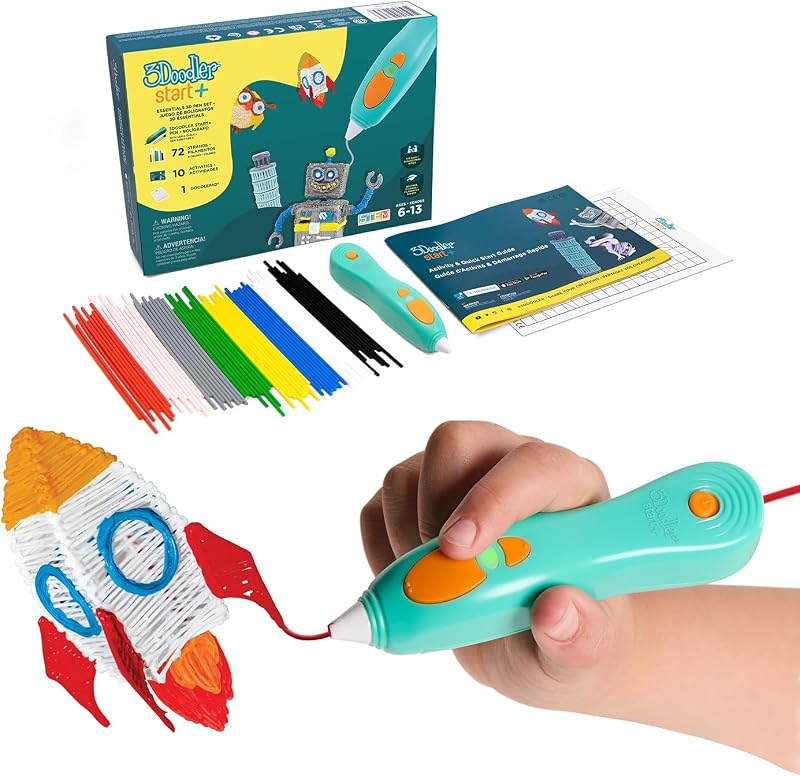
3Doodler Start+ Essentials 3D Pen suits younger users and introductory educational projects better than the main model because it is designed specifically as an easy-to-use STEM toy for boys and girls ages 6 and older, emphasizing child-safe low-temperature operation rather than higher-temperature ABS extrusion.
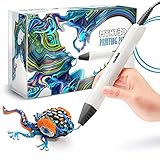
MYNT3D Professional Printing 3D Pen serves advanced crafters researching the scrib3d p1 vs mynt3d comparison who want precise visual telemetry during detailed fabrication, offering an integrated OLED display designed for careful monitoring during intricate model builds.
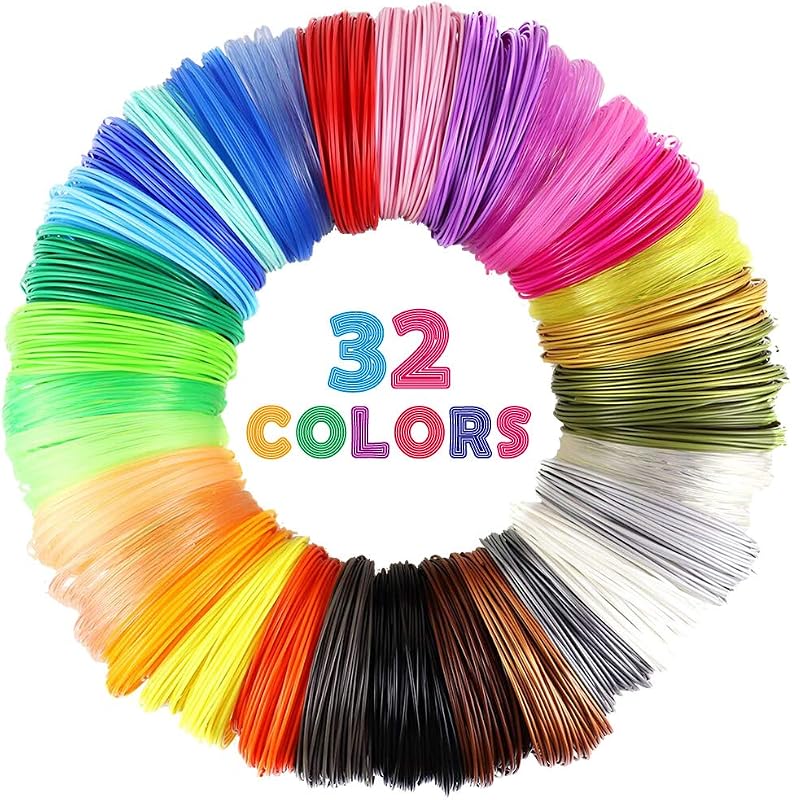
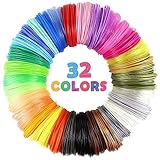
MIKA3D 32 Colors 3D Pen represents a practical material expansion for makers who already own an operational 3D pen and need a comprehensive color selection, delivering 320 total feet of PLA plastic across 32 individual hues alongside four protective finger caps for manual modeling.
FAQ 248 words
What filament materials work with the SCRIB3D P1?
The pen operates within two distinct temperature ranges configured for standard PLA plastic between 160°C and 210°C (320°F to 410°F) and ABS plastic between 210°C and 235°C (410°F to 455°F). Higher-temperature engineering filaments like nylon or polycarbonate are not supported by the internal heating assembly.
How long does the device take to heat up before use?
Preheating takes approximately two to three minutes once the power adapter is connected to the back of the pen. The red status light turns on during the heating phase to signal that the ceramic block is coming up to the necessary extrusion temperature.
Does the pen shut off automatically if left unattended?
Yes, the hardware includes an integrated safety feature that initiates an automatic sleep state after two minutes of inactivity. This function lowers thermal output when doodling stops, helping prevent material degradation inside the nozzle and improving workstation safety.
Can the SCRIB3D P1 operate on an internal rechargeable battery?
No, the unit relies on an external power adapter that must remain plugged into the back of the pen during operation. Continuous connection to a wall outlet is necessary to supply the heating element and internal drive motor.
How do you adjust the filament extrusion speed?
Extrusion pacing is regulated via a side-mounted stepless speed slider. This continuous slider allows makers to adjust material flow fluidly without being restricted to preset speed steps, assisting with both slow-detail fills and rapid broad-surface builds.
The other listings this review names
-
-
MYNT3D Professional Printing 3D Pen with OLED Display
8.2/10 Our score 4 spec fields
-
9.6/10 Our score 6 spec fields