Ubiquiti UniFi 7 Pro Breakdown: Cutting-Edge Wireless for Serious Gamers
Robert Thackeray 27 Oct 2026 9 min read ASIN B0CW1VSBXJ
This product against the Electronics median
| Figure | This product | Category median | Where it sits |
|---|---|---|---|
| Our score Our score, out of 10. | 8.2/10 | 8.8/10 n=65 | 7% lower than the median |
| Spec fields published How many attributes the seller fills in on the listing. | 6 | 6.0 n=65 | level with the median |
Medians are taken across the 65 published reviews in Electronics; n on each row is how many of them publish that figure. The notch on every bar marks the median, so a fill reaching past the notch sits above it. Scores are out of 10, based on listed specifications and buyer feedback.

- Brand
- Ubiquiti Networks
- Our score
- 8.2/10
- Spec fields
- 6 attributes on the listing
As Amazon Associates, we earn from qualifying purchases. This means we may receive a small commission at no extra cost to you if you click through and make a purchase.
For competitive gamers and home entertainment enthusiasts seeking uncompromising local wireless speeds, the Ubiquiti UniFi 7 Pro represents a major generational shift in wireless networking hardware. As modern interactive titles demand instantaneous response times and local high-bitrate media streaming pushes network hardware to its breaking point, traditional wireless standards often struggle with spectrum congestion and queueing latency. This access point enters the ecosystem as a dedicated solution designed to leverage cleaner airwaves, expanded throughput capacity, and modern client handshakes. If you are debating whether to retire a previous-generation workhorse like the unifi u6 pro access point or build an elite enterprise-grade home layout from scratch, understanding how this unit allocates its radio resources is critical before making an investment.
This breakdown explores how the ubiquiti wifi 7 access point integrates into an enthusiast home environment, dissecting its technical specifications, deployment prerequisites, and overall value. We examine the hardware design, investigate the real-world utility of unifi 7 pro for gaming, detail configuration steps within the UniFi ecosystem, and directly evaluate unifi 7 pro vs u6 pro considerations for current network owners. By evaluating manufacturer capabilities alongside platform-level demands, this guide ensures you know precisely what hardware and infrastructure are necessary to extract peak performance from this high-speed access point.
What You Get With the Ubiquiti UniFi 7 Pro 147 words
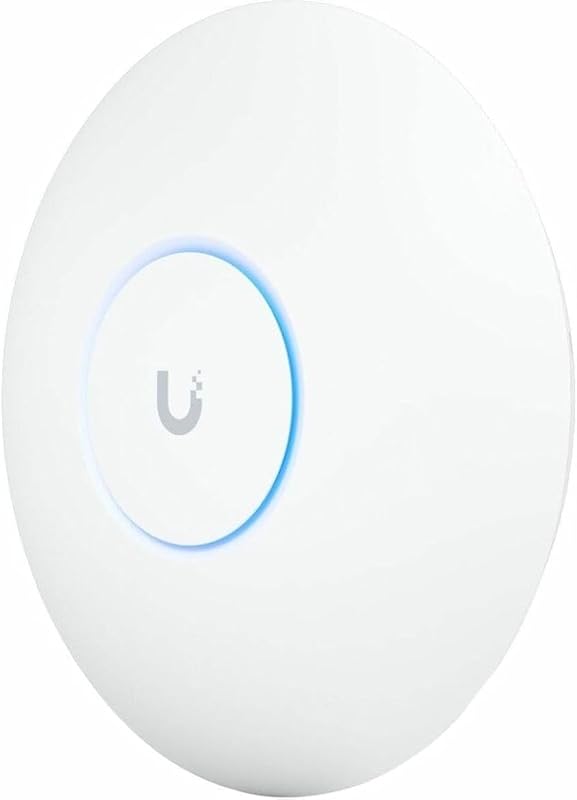
The Ubiquiti UniFi 7 Pro is packaged strictly as a high-density, high-throughput network appliance intended to mount directly overhead. Designed primarily for clean architectural deployments, the unit focuses on transmitting clean signals downward across living spaces, gaming dens, and media rooms. Prospective buyers should note that the physical package includes the core access point hardware, but the listing confirms that a PoE+ power adapter is not included in the box, requiring users to supply power through external network hardware.
- Ceiling-mounted form factor optimized for expansive horizontal wireless coverage
- Next-generation WiFi 7 wireless standard support
- Six total internal antennas engineered for balanced radio distribution
- Six spatial stream configuration for concurrent multi-device traffic handling
- Dedicated 6 GHz band integration designed to eliminate legacy network interference
- Single Ethernet uplink port operating at 1000 Mbps bandwidth
- Native integration with the centralized UniFi OS ecosystem
- WPS and touch-based control methodology supported by hardware
Key Specifications 88 words
Specification Attribute Hardware Detail
- Wi-Fi Generation
- WiFi 7
- Wireless Compatibility
- 802.11ax / WiFi 7
- Antenna Configuration
- 6 Internal Antennas
- Spatial Streams
- 6 Spatial Streams
- Frequency Architecture
- Dual-Band with 6 GHz Support
- Data Transfer Rate
- 5.7 gigabytes_per_second
- Maximum Upstream Rate
- 312.5 megabits_per_second
- LAN Interface
- 1 x 1000 Mbps RJ45 Port
- Operating System
- UniFi OS
- Operating Voltage
- 57 Volts DC (PoE+ Required, Adapter Not Included)
- Security Protocol
- WPA2
- Network Router Architecture
- Hybrid
Fields the seller filled in on the Amazon listing (6)
- Color
- White
- Size
- 1.8"
- Dimensions
- 8.1 x 8.1 x 1.8 inches
- Weight
- 1.5 Pounds
- Product Group
- Personal Computer
- Binding
- Electronics
Wireless Latency and Local Throughput for Competitive Play 293 words
In competitive online gaming, total bandwidth is rarely the bottleneck; instead, packet consistency, bufferbloat, and transmission jitter dictate whether you land a critical shot or suffer from sudden rubberbanding. The unifi 6 ghz gaming ap capability provided by the Ubiquiti UniFi 7 Pro delivers an isolated radio environment that circumvents the overcrowded 2.4 GHz and 5 GHz bands typical in residential areas. By operating on uncluttered channels, client devices that support modern wireless standards bypass channel contention and packet collisions, creating an experience remarkably close to a dedicated patch cable. When paired with responsive upstream switches like the unifi pro max 16 poe, the access point maintains predictable ping times even during heavy household usage.
Raw unifi u7 pro performance also addresses local data transfers across personal computer clients and private storage nodes. The hardware advertises an aggregate data transfer rate capability of 5.7 gigabytes_per_second across its radio array, combined with an upstream ceiling of 312.5 megabits_per_second. For local game streaming through applications such as Moonlight or Steam Link, this bandwidth ceiling prevents frame drops and bitrate dips during high-motion scenes. Distributing six spatial streams ensures that secondary background tasks, including system updates, cloud backups, and local file transfers, do not degrade active gameplay streams.
However, players must understand how data routes through physical interfaces. While the wireless radios deliver next-generation capacity, the physical uplink listed on the unit is a single 1000 Mbps Ethernet port. This means that any individual data stream bound for an external internet connection or local wired server remains tethered to standard gigabit LAN throughput limits. For single-player downloads and online multiplayer traffic, standard gigabit bandwidth is more than adequate, but power users expecting multi-gigabit wired passthrough from this specific physical port should tailor their network architecture around the 1000 Mbps physical ceiling.
Comparing Generational Hardware and Upgrades 265 words
Enthusiasts weighing the unifi 7 pro vs u6 pro upgrade equation often look at how network congestion is managed under intense load. The older unifi u6 pro access point established a high baseline for household reliability, operating primarily across standard dual-band frequencies. In contrast, the newer hardware expands spectrum access through the inclusion of 6 GHz channels, granting access to wide channel widths without sharing airtime with legacy smart home peripherals or older mobile devices. For households packed with connected gadgets, this separation alone eliminates an enormous amount of background airtime contention.
Examining the core unifi 7 pro specs reveals that the newer model deploys six internal antennas to govern its six spatial streams. This arrangement allows the access point to form direct, focused beams to client devices throughout the room. If your existing setup relies on legacy installations like the unifi ap ac pro, the jump to this unit yields exponential improvements in both client capacity and transmission efficiency. Legacy access points frequently choke when handling simultaneous high-bitrate video streams and low-latency gaming traffic, whereas modern spatial multiplexing ensures smooth data scheduling across multiple active clients.
The primary consideration when upgrading lies in your household client ecosystem. Because the full benefit of 6 GHz transmission requires compatible client network cards, older gaming rigs, consoles, and portable devices will continue using the 802.11ax and dual-band radio paths. While these older clients still benefit from the updated processing power, internal antenna layout, and modern UniFi OS scheduling routines, users without modern client hardware will not experience the full performance leap until their personal devices catch up to modern wireless standards.
Deployment and Power Requirements 255 words
Executing a successful unifi u7 pro setup requires planning around both physical placement and power delivery. Because the unit is specifically engineered as a ceiling-mounted hybrid network device, placing it flat on an entertainment stand or tucking it into a media cabinet will compromise its omnidirectional internal antenna dispersion pattern. Overhead mounting ensures that the six internal antennas distribute signal downward with minimal obstruction from furniture, metallic desktop chassis, or masonry walls. The circular form factor blends into living room ceilings, maintaining a clean architectural appearance.
Power delivery is the most critical hurdle for new adopters. The listing indicates that the hardware runs at an operating level of 57 volts DC, categorized under PoE+ standards, and explicitly notes that a PoE+ power adapter is not included in the box. Users cannot simply plug this device into a standard wall outlet with a barrel plug, nor can they rely on standard low-power 15.4W PoE switches. You must supply power via an enterprise-grade PoE+ network switch or an external 57V PoE+ injector capable of meeting the unit draw, making power planning essential prior to unboxing.
For large spaces where a single ceiling drop cannot cover isolated gaming dens, evaluating wider platform components such as the unifi u7 mesh can help maintain consistent network coverage. Once connected to a proper power source and linked via Ethernet, the unit utilizes standard UniFi OS adoption procedures, allowing network administrators to establish custom SSIDs, partition competitive gaming rigs onto dedicated virtual networks, and adjust radio bandwidth allocations through a unified interface.

Network Management and Client Compatibility 203 words
The software foundation of this access point relies on UniFi OS, which provides enterprise-style visibility without requiring complex command-line interaction. Through the management interface, users can inspect connection health, track client transmission quality, and isolate problematic devices that generate radio noise. The listing also highlights WPS functionality alongside touch-based control options, simplifying device pairing when rapid client onboarding is necessary in modern home entertainment spaces.
On the security front, the hardware listing specifies WPA2 protocol support, ensuring broad compatibility across older personal computer builds, modern handhelds, and legacy streaming sticks. While modern standards often transition toward newer security frameworks, maintaining reliable WPA2 handshakes prevents legacy client connection failures. Users can establish dedicated high-performance SSIDs exclusively for their primary gaming rigs while assigning older smart devices to isolated background networks.
Clients seeking extreme throughput across localized networks might also look toward specialized hardware variations like the ubiquiti u7 pro xg when designing complex topologies. However, for a dedicated residential gaming space, the hybrid routing design and stable driver support built into UniFi OS make this access point remarkably self-sufficient once optimal radio channels are selected. Automated radio frequency monitoring minimizes the need for manual interference tuning, keeping gameplay channels free from unexpected neighbor interference.
Ubiquiti UniFi 7 Pro Pros and Cons 53 words
Pros
Pros
- Next-generation WiFi 7 wireless standard support
- Dedicated 6 GHz band eliminates airwave congestion
- Six spatial streams manage heavy simultaneous traffic
- Robust UniFi OS centralized network management
- Ceiling-mounted profile with six internal antennas
Cons
- PoE+ power adapter not included in box
- Requires overhead ceiling mounting for optimal signal
- Physical network uplink capped at 1000 Mbps
Is the Ubiquiti UniFi 7 Pro Worth It 220 words
Determining if the Ubiquiti UniFi 7 Pro is worth it comes down to your current network infrastructure and your tolerance for wireless latency. For competitive PC gamers, media enthusiasts streaming raw 4K video locally, and power users who have already deployed a PoE+ infrastructure, this access point offers a massive upgrade in airtime efficiency. The inclusion of 6 GHz capabilities effectively provides a clean, private highway that shields high-priority traffic from household congestion, delivering the consistency demanded by latency-sensitive interactive media.
Conversely, shoppers looking for a simple plug-and-play desktop router will find the deployment hurdles frustrating. Because the listing does not include a PoE+ power injector, and because ceiling mounting is mandatory to achieve optimal coverage from the internal antenna array, casual users who lack structured in-ceiling Ethernet wiring may face an involved installation process. Furthermore, households utilizing modest internet connections without local media servers might find their speeds bounded by external provider limits rather than wireless bottlenecks.
Ultimately, if you already operate within the UniFi ecosystem or plan to build a high-performance network anchored by enterprise-grade switches, this unit serves as a robust gateway into the next era of wireless fidelity. It provides the spatial streams, channel cleanliness, and operating stability necessary to game competitively over the air without keeping a long yellow patch cord draped across your living room floor.
Other Options to Consider 106 words
WiFi 6 Dual Band suits buyers who operate within the TP-Link Omada ecosystem and prefer an AX3000 business-class ceiling access point that comes bundled with a dedicated DC adapter, offering an easier out-of-the-box power solution than unbundled PoE+ alternatives.

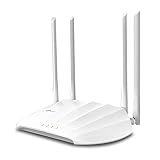
Desktop WiFi Bridge serves users looking for a traditional tabletop setup, featuring four external fixed antennas, AC1200 speeds, and multi-mode functionality including client range extender configurations that do not require overhead ceiling mounting.
Mesh provides an ultra-slim AX3000 wireless option powered by the TP-Link Festa cloud architecture, catering to homeowners who want self-organizing mesh roaming and HE160 channel support without running complex local controller software.
FAQ 186 words
Does the Ubiquiti UniFi 7 Pro include a power adapter?
No, the product listing explicitly specifies that a PoE+ adapter is not included in the package. The device operates at 57 volts direct current and requires an external PoE+ network switch or a compatible standalone PoE+ power injector to function.
What operating system controls the Ubiquiti UniFi 7 Pro?
The access point runs on UniFi OS, which provides centralized management, traffic monitoring, and network configuration tools across all connected Ubiquiti devices through a unified software interface.
How many antennas are built into the unit?
The access point features six internal antennas designed to deliver balanced coverage across living areas, managing six spatial streams to support multiple client transmissions simultaneously.
What is the maximum speed of the physical LAN port?
The single physical uplink interface on the access point supports a LAN port bandwidth of 1000 Mbps, providing a stable gigabit connection to your local network switch or router.
Does the device support touch-based controls or WPS?
Yes, according to the hardware specifications, the unit features WPS connection capability alongside touch-based control methods for managing physical device interactions and setup routines.
The other listings this review names
-

Omada AX3000 Wireless Access Point, w/DC Adapter, 5yr Warranty(EAP650)
8.8/10 Our score 6 spec fields
-
TP-Link TL-WA1201, AC1200 Dual Band Wireless Gigabit Access Point
8.6/10 Our score 5 spec fields
-

TP-Link Festa F65, WiFi 6 AX3000 Ultra-Slim Wireless Access Point
8.8/10 Our score 4 spec fields