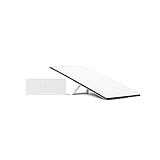
UniFi U7 Mesh Deep Dive: Is Ubiquiti’s WiFi 7 AP Built for Gamers?
Robert Thackeray 14 Nov 2026 10 min read ASIN B0H92XR8DF
This product against the Electronics median
| Figure | This product | Category median | Where it sits |
|---|---|---|---|
| Our score Our score, out of 10. | 8.2/10 | 8.8/10 n=83 | 7% lower than the median |
| Spec fields published How many attributes the seller fills in on the listing. | 2 | 6.0 n=84 | 67% fewer than the median |
Medians are taken across the 84 published reviews in Electronics; n on each row is how many of them publish that figure. The notch on every bar marks the median, so a fill reaching past the notch sits above it. Scores are out of 10, based on listed specifications and buyer feedback.

- Brand
- Ubiquiti Networks
- Our score
- 8.2/10
- Spec fields
- 2 attributes on the listing
As Amazon Associates, we earn from qualifying purchases. This means we may receive a small commission at no extra cost to you if you click through and make a purchase.
Network congestion, packet jitter, and unpredictable latency spikes represent the ultimate obstacles for competitive PC players, console enthusiasts, and 4K media streamers. As interactive gaming platforms push higher tick rates and uncompressed local media demands continuous high-bandwidth delivery, traditional consumer wireless routers frequently struggle under concurrent multi-device traffic. The UniFi U7 Mesh enters this high-performance landscape as a specialized, next-generation wireless node engineered by Ubiquiti Networks to bring the latest wireless protocol into demanding home and entertainment environments. Designed as a compact indoor and outdoor access point equipped with built-in long-range Wi-Fi antennas, it promises to bridge the divide between enterprise wireless engineering and the low-latency responsiveness demanded by competitive gaming stations.
Determining whether this access point represents the right upgrade for your gaming rig or home theater hub requires looking beyond marketing buzzwords and examining its exact capabilities, structural architecture, and operational demands. This comprehensive analysis breaks down the official unifi u7 mesh specs, evaluates real-world deployment practicalities, explores mounting versatility for indoor and unifi u7 mesh outdoor setups, and dissects software controller requirements. Read on to discover what hardware comes in the package, how the wireless architecture handles latency-sensitive entertainment traffic, how it compares to alternative networking gear, and whether is unifi u7 mesh worth it for your personal entertainment environment.
What You Get With the UniFi U7 Mesh 91 words
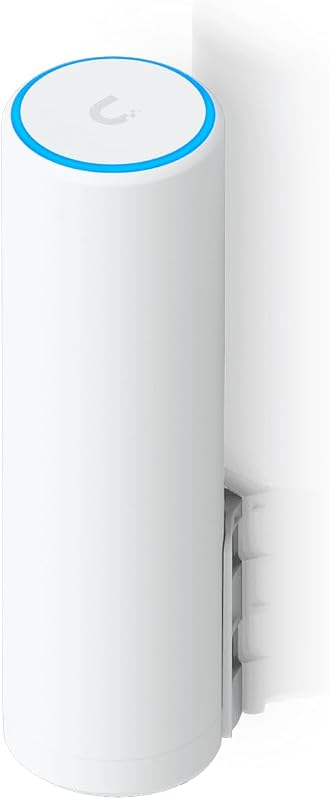
The retail package delivers a focused hardware foundation designed to integrate straight into an existing wireless infrastructure, containing the core hardware component required to deploy next-generation wireless coverage across your living space or gaming quarters.
- UniFi U7 Mesh wireless access point hardware unit (single package count)
- Next-generation WiFi 7 wireless networking standard implementation
- Built-in long-range Wi-Fi antenna system for broad directional coverage
- Dual-environment casing engineered for both indoor and outdoor installations
- Compact physical chassis engineered for discrete surface or wall positioning
- Official manufacturer backing under the Ubiquiti Networks ecosystem
Key Specifications 65 words
Attribute Specification Detail
- Brand
- Ubiquiti Networks
- Model
- UniFi U7 Mesh
- Wireless Networking Standard
- WiFi 7
- Antenna Architecture
- Wi-Fi (built-in long-range antennas)
- Deployment Rating
- Indoor / outdoor dual-rated casing
- Form Factor
- Compact tabletop, wall, or exterior pole/surface node
- Package Quantity
- 1 Count (1 item included)
- Ethernet Ports
- Listing does not specify port speed or interface count
- Power Over Ethernet Standard
- Listing does not specify PoE standard or injector inclusion
Wireless Performance and Low Latency for Gaming 272 words
For high-intensity multiplayer titles such as competitive first-person shooters, real-time strategy games, and fighting titles, raw wireless speed takes a backseat to packet stability and deterministic latency. An access point can boast massive theoretical bandwidth numbers, but if queue delay or bufferbloat creates micro-spikes during team firefights, your in-game performance degrades instantly. Deploying the unifi u7 mesh for gaming leverages the core architectural advantages of the WiFi 7 standard, which is engineered from the ground up to reduce spectral congestion, manage shared wireless airtime more effectively, and lower round-trip packet travel times compared to legacy wireless iterations.
In homes packed with multiple smart TVs, streaming media players, smartphones, and IoT appliances, airtime contention routinely causes packet loss on older wireless standards. The WiFi 7 protocol integrates advanced multi-channel utilization mechanisms that enable client devices to exchange traffic across multiple wireless frequencies simultaneously rather than waiting in an arbitrary queue. When integrated alongside a central console such as the ubiquiti networks unifi dream machine pro, network administrators gain granular control over client bandwidth allocation, VLAN segmentation for gaming hardware, and custom traffic rules that prevent background 4K video downloads from interfering with competitive PC gaming sessions.
Realizing the full potential of unifi u7 mesh performance requires compatible client devices capable of negotiating modern WiFi 7 signaling. While older Wi-Fi 5 and Wi-Fi 6 client cards function seamlessly via backward compatibility, peak transmission speed and the lowest possible latency floors unlock when paired with contemporary Wi-Fi 6E or WiFi 7 wireless adapters. The integrated long-range Wi-Fi antennas work to keep signal-to-noise ratios high across domestic gaming rooms, mitigating the signal attenuation that typically causes abrupt dropouts during online tournament play.
Coverage Architecture and Outdoor Deployment Considerations 275 words
Signal penetration and reliable coverage boundaries represent persistent challenges when designing an entertainment-focused home network. The manufacturer equips this compact node with built-in long-range antennas specifically calculated to propagate RF energy evenly through common residential architectural barriers. Assessing the practical unifi u7 mesh range involves accounting for interior framing, drywall, glass dividers, and electrical utility corridors, all of which attenuate high-frequency radio waves. By engineering a high-gain internal antenna array inside a compact enclosure, the access point maintains a balanced signal footprint capable of sustaining high-bitrate 4K and 8K media streaming across multiple connected entertainment zones.
A notable strength outlined in the product specifications is its dual-purpose indoor and outdoor deployment capability. Setting up a dedicated unifi u7 mesh outdoor installation allows homeowners to extend low-latency coverage to outdoor patio entertainment bars, poolside projector setups, or detached workshops without relying on weak indoor spillover signals. Rather than forcing outdoor media hubs to struggle on degraded, low-throughput links, an exterior-mounted node delivers full-speed local wireless right to the outdoor entertaining space.
Exterior installations introduce specific environmental hurdles that demand careful pre-deployment planning. While the listing notes the hardware is designed for indoor and outdoor use, the listing does not specify the precise IP water and dust resistance rating, nor does it confirm whether weatherproof rubber gaskets or external mounting brackets are bundled in the single-item package. System builders planning exterior installations should utilize outdoor-rated shielded Ethernet cabling with proper drip loops to prevent water intrusion. This resilient backbone also reinforces exterior smart surveillance and security hardware across your perimeter, ensuring smooth operation when connecting adjacent devices like a unifi g4 doorbell to your unified network fabric.
Setup Architecture and Ecosystem Compatibility 273 words
Unlike plug-and-play consumer routers that rely on simplistic mobile wizards with stripped-down settings, Ubiquiti access points are components of an integrated software-defined networking platform. Executing a standard u7 mesh setup involves adopting the device into the centralized UniFi Network controller software. This interface grants gaming and technology enthusiasts deep visibility into RF spectrum scans, channel utilization charts, client signal strengths, and client-specific roaming behavior. Having the power to lock a stationary gaming console to a specific access point or assign dedicated radio bands to VR headsets gives enthusiasts the control required for high-fidelity interactive media.
Power delivery represents an essential hardware detail to consider prior to purchase. The Amazon product details confirm a single package unit count but state that the listing does not specify whether an external Power over Ethernet injector, AC wall adapter, or power cord is included in the packaging. Ubiquiti enterprise access points conventionally pull power directly through the network cable using standardized PoE switches or dedicated midspan injectors. Buyers must review their existing switch hardware to confirm available PoE wattage headroom before unboxing to avoid unexpected deployment delays.
Upgrading an older network installation by replacing a legacy node such as a unifi ap ac pro with this ubiquiti wifi 7 access point delivers an immediate jump in maximum theoretical capacity. However, network architects must evaluate their physical uplink cabling. Feeding a modern WiFi 7 wireless access point with an inadequate backhaul link creates an artificial bottleneck between the radio interface and the central switch. Ensuring robust Cat6 or better cabling throughout your walls ensures that high-bandwidth wireless clients can transfer massive modern gaming install patches without saturating the local link.
Hardware Limitations and Environmental Management 241 words
Thorough evaluation requires an honest inspection of omitted specifications and operational constraints. The Amazon listing data clearly confirms a compact form factor, indoor/outdoor deployment ratings, WiFi 7 architecture, and long-range Wi-Fi antennas, but the listing does not specify the exact Ethernet interface speed, physical port count, or discrete multi-band spatial stream arrangements. Enthusiasts planning multi-gigabit wired backhaul infrastructure should take note of these listing omissions and verify specific switch port pairings accordingly.
Operating temperature management is another critical factor in compact, high-throughput wireless equipment. WiFi 7 processing components handle extensive computation, coordinating complex multi-link operations and high-order modulation schemes that generate measurable internal heat. When deployed in a gaming environment where the AP continuously handles sustained, high-bitrate transfers, the compact housing relies on natural thermal dissipation. Proper placement on open desktop surfaces or unblocked vertical wall positions is vital to prevent thermal throttling from undermining low-latency gaming traffic during extended play sessions.
Prospective buyers must also distinguish between true wired access point functionality and wireless mesh repeaters. While the product carries the mesh naming convention and natively supports wireless uplink hopping within the UniFi ecosystem, using wireless meshing inherently introduces an airtime penalty. Relaying packets wirelessly through the air twice increases latency jitter, which runs contrary to the goals of competitive gaming. For peak gaming responsiveness, running a direct Ethernet cable to the access point provides an optimal foundation, utilizing the mesh wireless uplink only when running physical cabling is physically impossible.
UniFi U7 Mesh Pros and Cons 48 words
Pros
Pros
- Next-generation WiFi 7 wireless capability
- Built-in long-range Wi-Fi antennas
- Dual indoor and outdoor deployment rating
- Compact form factor for versatile placement
- Seamless UniFi network ecosystem integration
Cons
- Power injector inclusion not specified in listing
- Ethernet port interface speeds omitted from data
- Requires external UniFi management controller infrastructure
Is the UniFi U7 Mesh Worth It 240 words
The UniFi U7 Mesh represents a specialized networking tool tailored for enthusiasts who take wireless performance, latency control, and network architecture seriously. If you already maintain an active UniFi ecosystem, manage a central UniFi gateway, and possess the PoE switching capacity required to drive modern hardware, this unit stands out as a compact, future-proof access point capable of handling heavy entertainment demands across indoor media lounges or exterior patios. The integration of WiFi 7 wireless protocols ensures your wireless local area network will accommodate emerging handheld consoles, VR rigs, and high-performance gaming laptops for years to come.
Conversely, this unit is ill-suited for casual consumers seeking an all-in-one plug-and-play wireless router that functions straight out of a standalone box without supporting network infrastructure. Users without existing PoE switches, those unfamiliar with software controller management, or shoppers looking for consumer-grade mesh kits with integrated router routing engines, voice assistants, and bundled consumer mobile apps may find enterprise-style hardware frustrating. Those desiring an autonomous, multi-unit consumer wireless kit might lean toward comprehensive turnkey consumer systems such as the tp link be95 instead of building out a dedicated modular networking stack.
For dedicated PC builders, high-throughput streamers, and multi-platform gaming households, this compact access point provides enterprise-tier RF engineering in a sleek footprint. Provided you account for power requirements and plan for an optimal wired Ethernet backhaul, it establishes a high-speed, stable wireless foundation that eliminates jitter and handles demanding media libraries with ease.
Other Options to Consider 118 words
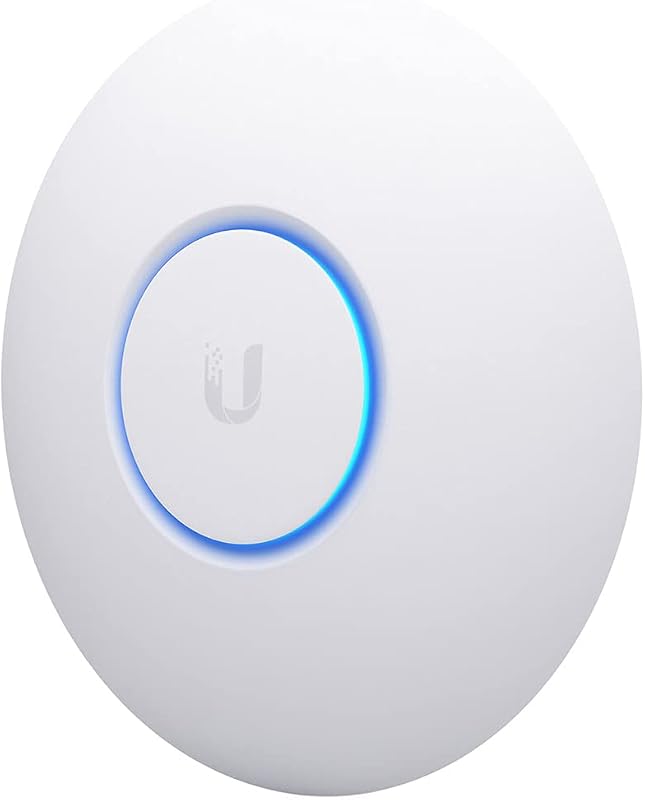
Ubiquiti UniFi nanoHD Compact 802.11ac suits users operating established, high-density 802.11ac environments who do not require WiFi 7 speeds but desire a proven Wave2 MU-MIMO enterprise access point with a low-profile indoor ceiling or wall mount profile.
WiFi 6 Dual Band suits network administrators looking for an AX3000 Omada-managed wireless access point that includes PoE support, an included DC power adapter, and enterprise mesh roaming features backed by a dedicated multi-year business warranty.
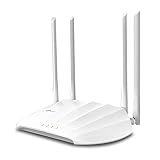
Desktop WiFi Bridge suits gamers or home office workers seeking a straightforward AC1200 dual-band desktop wireless gigabit access point featuring 4 fixed external antennas, MU-MIMO beamforming, and dedicated client range extender modes without the requirement of a software management controller.

FAQ 226 words
Does the UniFi U7 Mesh support outdoor installation?
Yes, the official product description designates the device as an indoor and outdoor compact access point, making it suitable for sheltered patios and exterior walls, though the listing does not specify its exact ingress protection water resistance rating.
Does the packaging include a Power over Ethernet injector?
The product listing specifies a single package count of one item and does not specify whether a PoE injector or AC adapter is included in the box, meaning buyers should ensure they have a compatible PoE switch or standalone power source ready.
Is the UniFi U7 Mesh suitable for competitive online gaming?
Yes, its integration of next-generation WiFi 7 technology provides reduced latency, improved airtime efficiency, and lower jitter, which directly benefits fast-paced multiplayer gaming when connected to compatible wireless client hardware.
Can the access point operate as a standalone router?
No, this unit is a dedicated wireless access point designed to operate within a broader network managed by a router and a UniFi software controller, rather than an all-in-one modem, router, and switch combination.
What is the wireless coverage range of this access point?
The listing states that the unit features built-in long-range Wi-Fi antennas to maximize wireless reach, but it does not specify an exact square footage figure, as actual range depends on environmental obstacles, wall density, and layout construction.
The other listings this review names
-

Ubiquiti UniFi nanoHD Compact 802.11ac Wave2 MU-MIMO Enterprise Access Point ( UAP-NANOHD-US)
8.6/10 Our score 6 spec fields
-

Omada AX3000 Wireless Access Point, w/DC Adapter, 5yr Warranty(EAP650)
8.8/10 Our score 6 spec fields
-
TP-Link TL-WA1201, AC1200 Dual Band Wireless Gigabit Access Point
8.6/10 Our score 5 spec fields