TP-Link Deco BE95 Wi-Fi 7 Mesh: Latency-Free Gaming Powerhouse
Robert Thackeray 22 Sep 2026 9 min read ASIN B0CN45QCBX
This product against the Electronics median
| Figure | This product | Category median | Where it sits |
|---|---|---|---|
| Buyer score Average star rating left by Amazon buyers, out of 5. | 4.6 / 5 | 4.5 / 5 n=23 | 2% higher than the median |
| Spec fields published How many attributes the seller fills in on the listing. | 6 | 6.0 n=23 | level with the median |
Medians are taken across the 23 published reviews in Electronics; n on each row is how many of them publish that figure. The notch on every bar marks the median, so a fill reaching past the notch sits above it. Buyer score is the average star rating left by Amazon buyers, not a score from this site.

- Brand
- TP-Link
- Buyer score
- 4.6 / 5 average from Amazon buyers
- Spec fields
- 6 attributes on the listing
As Amazon Associates, we earn from qualifying purchases. This means we may receive a small commission at no extra cost to you if you click through and make a purchase.
Network congestion, high ping spikes, and bandwidth throttling are constant hurdles for households pushing multi-gigabit connections to their absolute limits. If you are trying to decide whether the TP-Link Deco BE95 is the right network centerpiece for your home, the answer comes down to how much wireless throughput and local routing flexibility your setup truly requires. Designed as an elite whole-home Wi-Fi 7 mesh system, this platform brings quad-band capabilities, multi-gigabit copper and fiber ports, and massive wireless bandwidth to power-hungry gaming stations and modern entertainment hubs.
This evaluation dives into every facet of the flagship mesh hardware to see how it handles intense workloads, continuous local transfers, and latency-sensitive traffic. We examine the BE33000 quad-band frequency distribution, assess the simultaneous wired and wireless backhaul architecture, explore real-world management options, and analyze its physical interface configuration. Read on to discover whether this system delivers the uncompromising performance required for your connected home.
What You Get With the TP-Link Deco BE95 204 words
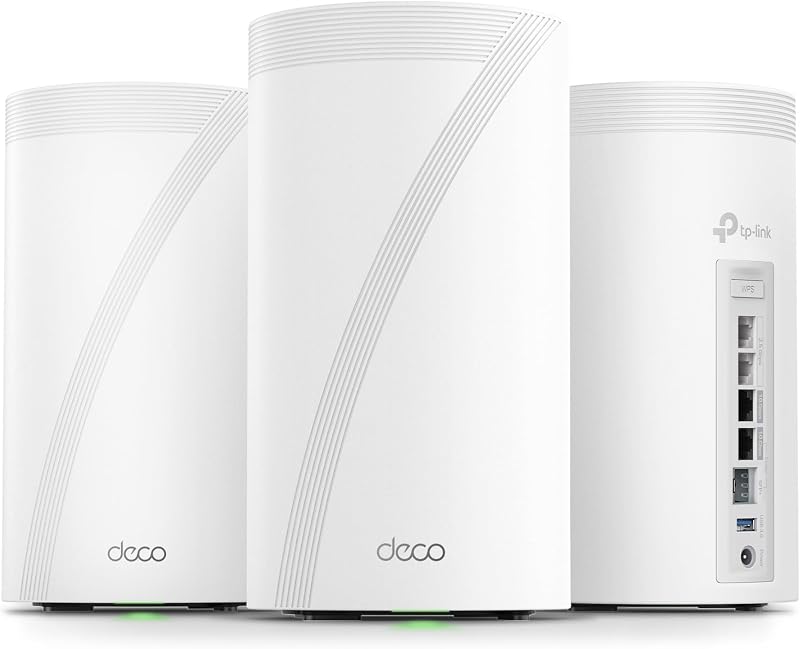
The TP-Link Deco BE95 package delivers an enterprise-grade home networking environment tailored for homes with massive bandwidth demands and extensive device counts. Engineered to replace standard ISP gateways and eliminate coverage gaps, the system arrives with an array of premium hardware and integrated software features directly from the box.
- BE33000 quad-band Wi-Fi 7 wireless connectivity reaching up to 11520 Mbps on 6 GHz band 1, 11520 Mbps on 6 GHz band 2, 8640 Mbps on the 5 GHz band, and 1148 Mbps on the 2.4 GHz band.
- Two high-performance 10G WAN/LAN ports, including one standard RJ45 port and one SFP+ Fiber/RJ45 Ethernet combo port.
- Two additional 2.5G Ethernet ports along with an integrated USB 3.0 port for flexible storage and peripherals.
- Simultaneous wireless plus wired backhaul integration leveraging TP-Link’s proprietary multi-channel technology.
- AI-driven seamless roaming with advanced algorithms that maintain a single network name across your entire home.
- TP-Link HomeShield suite providing basic network security scanning, IoT device identification, Quality of Service tools, and basic parental controls.
- Integrated VPN client and server functionality running simultaneously alongside ordinary internet connections.
- Array of 12 internal high-gain antennas calibrated for whole-home signal propagation and high device density.
- Deco app support for Android and iOS devices, plus voice management integration with Amazon Alexa and Google Assistant.
Key Specifications 93 words
Attribute Detail
- Wi-Fi Generation
- Wi-Fi 7 (802.11be)
- Frequency Band Class
- Quad-Band (Two 6 GHz bands, 5 GHz, 2.4 GHz)
- Maximum Data Transfer Rate
- 11520 Mbps (BE33000 total across bands)
- LAN/WAN Ports
- 4 Ports (Two 10 Gbps ports including SFP+ combo, two 2.5 Gbps ports)
- Antenna Configuration
- 12 Internal Antennas
- Channel Bandwidth
- Up to 320 MHz channels
- Wi-Fi 7 Features
- Multi-Link Operation (MLO), Multi-RUs, 4K-QAM
- Security Protocols
- WPA-PSK, WPA2-PSK, WPA3
- Operating System
- Linux
- USB Expansion
- 1x USB 3.0 Port
Fields the seller filled in on the Amazon listing (6)
- Color
- White
- Size
- 3 Pack
- Dimensions
- 5.04 x 5.04 x 9.29 inches
- Weight
- 10.03 pounds
- Product Group
- Personal Computer
- Binding
- Electronics
Dedicated Gaming Performance and Ultra-Low Latency 230 words
Online competitive multiplayer depends far more on stable ping and zero jitter than on simple raw speed. When evaluating the tp link be95 for gaming, the implementation of Wi-Fi 7 standards brings tangible competitive benefits. The router utilizes Multi-Link Operation (MLO), which allows modern compatible gaming hardware to send and receive data across multiple frequency bands simultaneously. Instead of being trapped on a single congested channel when family members stream video, your game packets flow across the clearest pathway without delay.
The broader tp-link deco be95 wifi 7 mesh architecture pairs 4K-QAM modulation with expansive 320 MHz channels across two dedicated 6 GHz bands. This combination drastically lowers local latency and reduces interference originating from legacy smart home appliances. TP-Link also integrates Quality of Service (QoS) controls inside the firmware, allowing users to designate gaming desktops or consoles as high-priority clients. By giving critical gaming packets priority lane access, the router preserves smooth hit registration and prevents sudden bufferbloat during heavy downloads.
Physical antenna layout also influences latency stability across rooms. Instead of protruding external paddles that require manual alignment, the Deco BE95 houses 12 internal antennas optimized to blanket horizontal and vertical living spaces evenly. If you have previously navigated dead zones on mainstream systems like the tp link deco x55, the substantial increase in internal antenna count and transmission power here ensures that gaming sessions remain uninterrupted regardless of where your workstation sits.
Multi-Gigabit Throughput and Deco BE95 10G Ports 196 words
Fast multi-gigabit internet plans often end up crippled by older hardware sporting standard 1 Gbps Ethernet jacks. A primary highlight of this hardware revolves around the deco be95 10g ports. TP-Link outfits each unit with two full-speed 10G WAN/LAN ports, consisting of a dedicated copper RJ45 port and a flexible SFP+ Fiber/RJ45 Ethernet combo port. These are complemented by two 2.5G ports, creating a comprehensive multi-gigabit switching backplane right inside the mesh node.
The inclusion of an SFP+ combo port provides critical versatility for home lab builders, high-end media servers, and modern fiber installations. Enthusiasts can connect fiber runs directly into the hardware using an optical transceiver, bypassing external converter boxes and minimizing point-of-failure risks. Connected devices like high-performance NAS appliances can interface over 10G or 2.5G copper drops, making multi-gigabit LAN file transfers seamless across the entire household.
Reviewing the official tp link be95 specs reveals an architecture designed to eliminate local network bottlenecks entirely. With maximum upstream rates reaching 10000 Mbps and a USB 3.0 port on hand for rapid localized network file sharing, high-bandwidth households will not encounter the switching limits common to older consumer routers like the classic tp link archer a7 series.
Wireless and Wired Backhaul Performance 209 words
A mesh network can only perform as well as the communication channel connecting its various nodes. With the Deco BE95, backhaul efficiency takes a massive leap forward thanks to TP-Link’s self-developed technology that enables simultaneous wireless plus wired backhaul. Rather than forcing the network into an either-or decision, the system aggregates wired Ethernet connections and wireless spectrum at the same time to move inter-node traffic with maximum throughput and minimal packet drop.
When looking at overall tp link be95 backhaul performance, the quad-band architecture provides a massive operational advantage. With two distinct 6 GHz bands alongside standard 5 GHz and 2.4 GHz frequencies, the system can designate one 6 GHz frequency band strictly for inter-node communication while keeping the second 6 GHz band entirely free for active client traffic. Because the deco be95 quad band speed tops out at 11520 Mbps on each 6 GHz band and 8640 Mbps on 5 GHz, wireless mesh links maintain speeds that rival direct physical cables.
This dynamic frequency handling ensures reliable tp link be95 coverage throughout sprawling multi-story residences where running in-wall Ethernet might be impossible. The built-in AI-Roaming technology continuously monitors link strength and client usage, seamlessly transferring your active smartphone or laptop connection to the nearest node without audio dropouts or video buffering as you navigate through your house.
TP-Link BE95 Setup and Network Management 205 words
Deploying an enterprise-grade quad-band mesh system does not require advanced command-line expertise. The initial tp link be95 setup is handled directly through the Deco app on an iOS or Android device. Once the primary unit connects to your ISP modem or fiber ONT, the app walks you through automated network detection, node configuration, and unified SSID creation in just a few minutes. Satellite units pair automatically as soon as they are powered on within range.
Management options within the app cater to both everyday users and advanced network administrators. The system supports full VPN client and VPN server functionality, allowing specific devices on your local network to route outbound traffic through remote VPN providers without running background software on each individual machine. Built-in voice control allows you to manage basic settings or toggle guest networks using Amazon Alexa or Google Assistant devices effortlessly.
Device protection is handled by TP-Link HomeShield, which comes built right into the Linux-based operating system. The platform delivers basic network security scans, IoT device identification, and flexible parental controls to schedule screen time or filter unsuitable web domains. Users migrating from standalone routers like the tp link archer family will appreciate how clean and straightforward the Deco interface keeps daily administration.
TP-Link Deco BE95 Pros and Cons 65 words
Pros
Pros
- Dual 10G WAN and LAN ports with SFP+ combo
- BE33000 quad-band speeds with dual 6 GHz bands
- Simultaneous wired and wireless backhaul support
- Multi-Link Operation and 320 MHz channel width
- Supports over 200 connected devices smoothly
- Built-in VPN client and server integration
Cons
- Requires external modem for most internet service providers
- Needs Wi-Fi 7 client devices to unlock top speeds
- Fixed internal antennas offer no manual directional positioning
Is the TP-Link Deco BE95 Worth It 179 words
Deciding if the is tp link be95 worth it comes down to the speed of your internet service and the complexity of your home setup. For enthusiasts with multi-gigabit fiber connections, dozens of connected IoT devices, and competitive gaming rigs requiring minimal latency, this system stands at the absolute top of the consumer mesh market. The dual 10G ports, expansive Wi-Fi 7 feature set, and immense quad-band headroom eliminate every potential bottleneck on your home intranet.
On the other hand, households subscribed to standard broadband plans below 1 Gbps will find the BE33000 quad-band architecture to be far more bandwidth than they can practically utilize. If your household primarily focuses on basic 4K streaming and standard remote work, deploying an ultra-enthusiast quad-band mesh node may be excessive, and standalone Wi-Fi 7 alternatives like the tp link be9700 can provide ample performance without enterprise-grade hardware overhead.
Ultimately, if you want a future-proof network backbone that handles heavy concurrent data streams, delivers dedicated 6 GHz channels, and pairs fiber-ready 10G backhaul options with seamless whole-home coverage, the TP-Link Deco BE95 represents an exceptional flagship investment.
Other Options to Consider 100 words
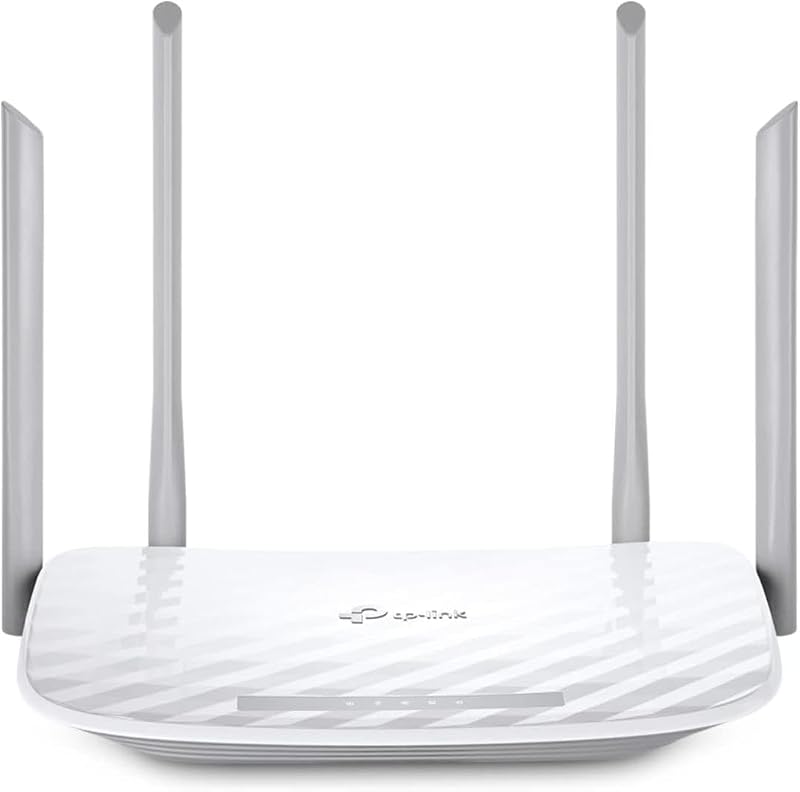
MU-MIMO Wireless Internet Router is a straightforward alternative for shoppers seeking an affordable AC1200 gigabit dual-band router with four external antennas, OneMesh support, and long-range coverage for basic everyday internet use.

Reliable Performance fits households looking for a standalone dual-band Wi-Fi 7 router covering up to 2,000 square feet, offering 3.6 Gbps BE3600 speeds, a dedicated 2.5G port, and support for up to 50 active devices.
4 x 10 100 Mbps is best suited for budget-conscious buyers or secondary utility spaces that only require basic AC1200 dual-band connectivity, four 10/100 Mbps fast Ethernet ports, and standard parental controls without high-speed multi-gigabit requirements.
FAQ 203 words
Does the TP-Link Deco BE95 support wired backhaul connections?
Yes, the Deco BE95 supports both wired Ethernet and wireless backhaul. In fact, TP-Link’s proprietary architecture enables the system to utilize wired and wireless backhaul connections simultaneously for maximum speed and link redundancy.
What ports are available on the TP-Link Deco BE95?
Each unit features four network ports: two 10G WAN/LAN ports (one standard RJ45 port and one SFP+ Fiber/RJ45 Ethernet combo port) and two 2.5G ports. The hardware also includes an integrated USB 3.0 port for external storage sharing.
Can the Deco BE95 work with other TP-Link Deco mesh systems?
Yes, TP-Link Deco products feature extensive compatibility and can be linked together to form a unified mesh Wi-Fi network under a single network name.
Do I need a separate modem to use the TP-Link Deco BE95?
Yes, the listing states that a modem is required for most internet service providers, as the Deco BE95 functions as a router and mesh access point rather than a built-in broadband modem.
How many connected devices can the TP-Link Deco BE95 handle?
According to the official product specifications, the Deco BE95 mesh system is engineered to handle over 200 connected devices concurrently across its quad-band wireless frequencies.
The other listings this review names
-

TP-Link AC1200 Gigabit Dual Band WiFi Router (Archer A6)
4.5/5 Amazon buyer average 6 spec fields
-
NETGEAR Nighthawk WiFi 7 Router RS90, Up to 2,000 sq ft, 3.6 Gbps
4.3/5 Amazon buyer average 45 spec fields
-

TP-Link AC1200 WiFi Router Dual Band Wireless Internet Router (Archer A54)
4.2/5 Amazon buyer average 6 spec fields